
Quick Summary
A leaking gate hydraulic arm typically results from damaged rod or piston seals, leading to fluid loss, erratic operation, and total automated gate stoppage. Ironworks Gate Co. outlines key diagnostic methods to determine whether replacing degraded seals will restore the operator or if severe rod scoring demands a complete actuator replacement. Readers will learn the essential safety, depressurization, and reassembly steps required to fix a leaking gate hydraulic arm and prevent recurrent fluid power failures.
Fix Leaking Gate Hydraulic Arm: Diagnostic and Repair Overview
A puddle of fluid beneath an automated gate actuator is a sign of hydraulic fluid loss. Hydraulic leaks may involve damaged piston seals internally or rod seals externally. Contamination and insufficient maintenance can contribute to seal damage, and ongoing leakage can eventually lead to equipment stoppage.[3]
According to technicians at Ironworks Gate Co., addressing a leaking hydraulic actuator requires a careful assessment of the cylinder components. Depending on whether the leak is limited to seal degradation or involves physical wear such as scoring along the cylinder rod, the appropriate solution may range from seal replacement to complete actuator replacement.
Safety Advisory: Always isolate electrical power and depressurize the actuator before performing any inspection or maintenance. Pressurized hydraulic fluid presents serious safety hazards, and all work must follow the manufacturer service instructions.
Diagnostic Summary: Understanding Hydraulic Cylinder Leaks
When fluid escapes from an actuator body or around fittings, a seal or mechanical interface has been compromised. In hydraulic cylinders, external leaks typically occur at rod seals and glands, while internal leaks occur across piston seals. Contamination, inadequate maintenance, and mechanical wear are primary contributors to seal degradation.[1]
Note on industry data: Research and statistical studies regarding hydraulic seal failures primarily concern industrial hydraulic cylinders and heavy industrial machinery rather than residential or commercial gate arms. Their findings provide broader industrial context on fluid power reliability rather than gate-specific failure rates.[2]
Immediate Action Checklist for Leaking Operators
- Isolate power: Disconnect electrical power to the system controller to prevent accidental operation while inspecting the unit.
- Follow depressurization procedures: Use the manufacturer-approved manual release procedure to relieve residual pressure in the system.
- Contain leaking fluid: Place a catch basin or protective barrier beneath the arm to collect leaking hydraulic fluid.
- Inspect for surface damage: Check the exposed cylinder rod for signs of scoring, pitting, contamination, or corrosion.
Key Symptoms of Hydraulic Fluid Loss
Loss of hydraulic fluid or failing internal seals can cause noticeable operational issues, including:
- Uneven movement: The actuator may hesitate or operate irregularly during its stroke.
- Loss of holding force: The arm may fail to maintain proper resistance or position when closed.
- Equipment stoppage: Continued fluid loss can lead to complete operational failure until fluid is replenished and leaks are addressed.
Tools and Supplies for Diagnostic Inspection
Proper diagnostic evaluation requires appropriate personal protective equipment and manufacturer-recommended tools to prevent contamination of the hydraulic system.
Diagnostic and Safety Gear
- Safety equipment: Chemical-resistant gloves and protective eyewear.
- Service tools: Manufacturer-specified release keys, appropriate metric or standard hand tools, and clean lint-free cloths.
- Fluid collection: A clean fluid catch container and lint-free cleaning materials.
Hydraulic Fluids and Replacement Seals
Always use the hydraulic fluid and seal types specified by the equipment manufacturer. Using unapproved fluids or incorrect seal materials can cause seal incompatibility, accelerated degradation, or equipment malfunction. Refer to the specific equipment documentation for compatible fluid specifications.
Step 1: Isolate Power and Relieve Hydraulic Pressure
Before inspecting components or loosening fittings, turn off the dedicated power supply to the gate operator system. Ensuring the unit cannot be energized remotely or via automated controls is essential for safety.
Once power is isolated, depressurize the actuator according to the manufacturer service instructions. Relieving internal pressure prevents fluid release during inspection and disassembly.
Step 2: Locate the Leak and Inspect Components
Clean the exterior of the housing to pinpoint the origin of any fluid discharge. Cycle the operator in accordance with safe diagnostic guidelines to identify the source of leakage.
External Seepage vs. Internal Leakage
- External seal failure: Fluid visibly escapes around the rod gland, manual release assembly, or body seals, indicating worn or damaged external seals.
- Internal leakage: The cylinder exterior may remain dry, but fluid slips past damaged piston seals internally, resulting in loss of operating force and equipment stoppage.
Checking for Component Damage
Inspect the piston rod and cylinder body carefully. Contamination or grit can cause scratches and scoring on the rod surface. If the rod surface is scored, pitted, or bent, installing replacement seals alone will not provide a reliable repair, as the damaged metal will quickly degrade the new seals.
Step 3: Proper Fluid Fill and Maintenance Considerations
Need fix leaking gate hydraulic arm?
We’re available now - call for a fast, free estimate.
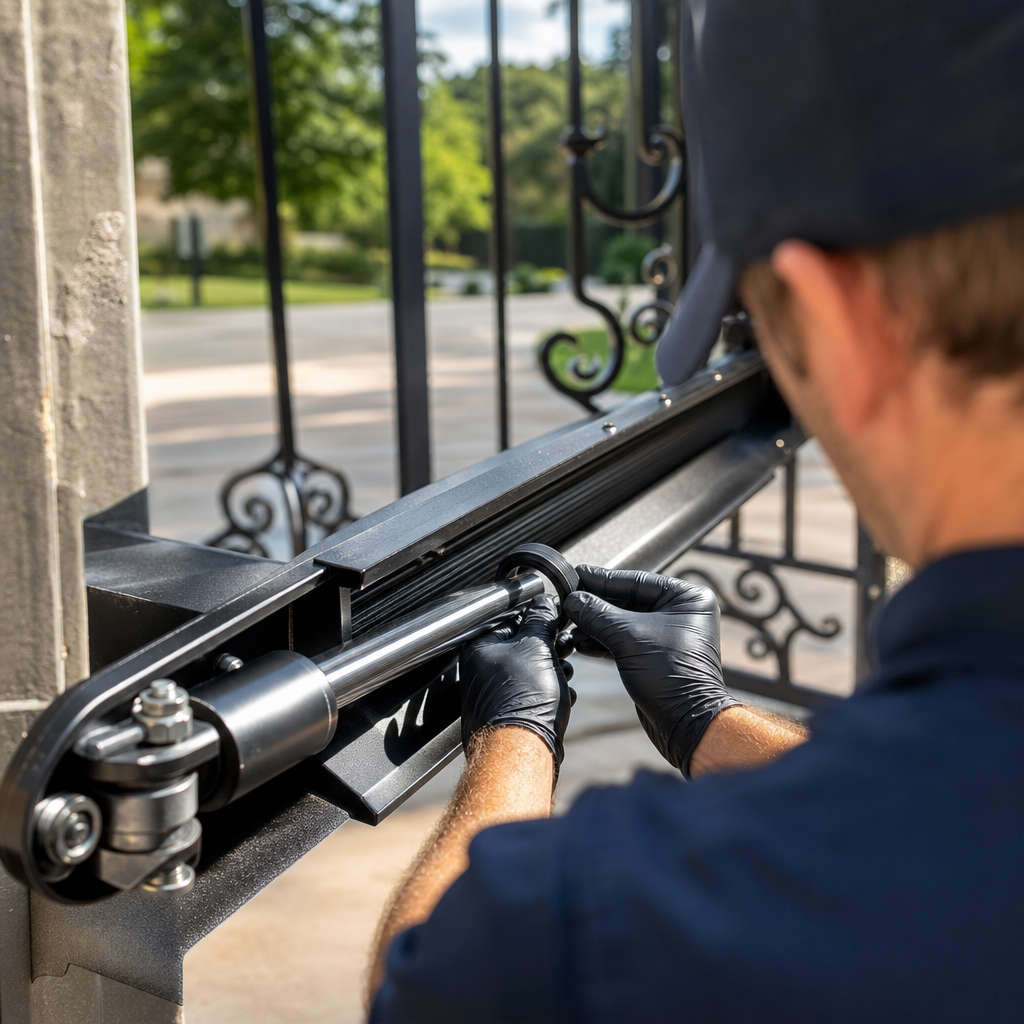
As noted by specialists at Ironworks Gate Co., fluid levels must be maintained according to manufacturer specifications. Insufficient maintenance or incorrect fluid levels can contribute to poor system operation and premature seal failure. When checking or adding fluid, ensure the area is clean to prevent debris and moisture from contaminating the hydraulic reservoir.
Step 4: Seal Replacement vs. Complete Actuator Replacement
The choice between replacing seals and replacing the complete actuator depends on the physical condition of the internal and external components:
When Seal Replacement May Be Appropriate:
- The cylinder rod, bore, piston, and gland are smooth and free of scoring, bending, corrosion, or structural damage.
- Leakage is isolated to worn or degraded elastomeric seals and O-rings.
- The internal mechanical components remain within manufacturer operational tolerances.
When Actuator Replacement May Be Required:
- The cylinder rod exhibits deep scoring, gouging, or bending.
- The internal cylinder bore has suffered significant wear, grooving, or mechanical damage.
- Corrosion or contamination has caused extensive damage to internal surfaces or the pump assembly.
- Replacement parts or compatible seals are no longer available from the manufacturer.
Qualified General Repair Procedure
When seal replacement is feasible, the repair should follow this qualified general procedure in accordance with manufacturer service instructions:
- Isolate the system from all electrical power and relieve residual hydraulic pressure.
- Remove the cylinder from its mounts and drain the hydraulic fluid into a suitable container.
- Disassemble the unit following the specific manufacturer service instructions.
- Thoroughly inspect all internal components, the cylinder bore, and the rod, cleaning them in a contamination-free environment.
- Install correctly oriented replacement seals using appropriate seal lubricants.
- Reassemble the actuator according to factory torque and alignment specifications.
- Refill with the manufacturer-specified hydraulic fluid, bleed air from the system if required, and test gradually for leaks under controlled conditions.
Step 5: System Reassembly and Testing
After reassembly and refilling, any trapped air should be bled from the hydraulic circuit if required by the manufacturer procedure. Once air is purged, test the gate actuator under controlled conditions, checking all seal interfaces and fittings for signs of leakage before returning the unit to normal service.
Evaluating Repair vs. Replacement Options
Addressing hydraulic leaks promptly helps prevent further component damage and unplanned equipment stoppage. If the structural and mechanical components of the cylinder remain in sound condition, replacing the seals can restore proper function. If extensive scoring, corrosion, or mechanical wear is present, Ironworks Gate Co. advises that full actuator replacement is the appropriate course of action.[5]
Frequently Asked Questions About Leaking Hydraulic Gate Arms
Why is hydraulic fluid leaking from my gate actuator?
Hydraulic leaks typically involve damaged piston seals internally or rod seals externally. Seal degradation is commonly caused by contamination, mechanical wear, environmental exposure, or insufficient maintenance over time.[4]
Can a leaking hydraulic gate arm be repaired, or does it need replacement?
Seal replacement may work when the rod, cylinder bore, piston, and gland remain completely undamaged. If there is significant scoring, bending, corrosion, or structural damage, replacing the actuator may be required.
How are seals replaced on a hydraulic gate cylinder?
A qualified repair involves isolating power, depressurizing the unit, removing and draining the cylinder, disassembling it according to manufacturer instructions, inspecting and cleaning all parts, installing correctly oriented seals, reassembling the unit, bleeding air if required, and gradually testing for leaks.
What type of hydraulic fluid should be used in a gate actuator?
Only use the specific hydraulic fluid recommended in the equipment manufacturer service documentation. Using incorrect or generic fluids can damage internal seals and cause system malfunction.
Is it safe to service a hydraulic gate arm without professional training?
Hydraulic actuators operate under pressure and are connected to heavy mechanical gate assemblies. Always isolate electrical power and depressurize the system before inspection, and follow all manufacturer service instructions. Complex repairs should be performed by qualified service personnel.
Need fix leaking gate hydraulic arm?
We’re available now - call for a fast, free estimate.
Sources
- Reactive maintenance of hydraulic cylinders in agricultural … – experts.arizona.edu (2009)
- (PDF) Improving hydraulic excavator performance through in line … – academia.edu (2017)
- July 19, 2026 – cntopa.com (2026)
- Analysis of the main malfunctions of hydraulic cylinders – bultech.enu.kz (2025)
- Case Studies – machineryanalysis.org
Related reading: Gate Access Control University Park | 10% Off & Free Estimate | Same-Day Service
Related reading: Emergency Gate Repair | 10% Off & Free Estimate | On-Site in 60 Minutes
Related reading: Gate Chain Repair | 10% Off & Free Estimate | On-Site in 60 Minutes
Frequently Asked Questions
How should hydraulic fluid spilled on a driveway from a leaking gate arm be cleaned up?
Hydraulic oil should be immediately absorbed using clay-based absorbent materials, sand, or dedicated spill pads to prevent surface staining and groundwater runoff. Ironworks Gate Co. provides professional fluid containment and cleanup during service visits to ensure your driveway and estate grounds remain undamaged.
How can I tell if a gate hydraulic arm has an internal leak without visible fluid?
An internal leak occurs when fluid slips past worn piston seals inside the sealed cylinder, causing the arm to lose holding force or drift open under light wind pressure. If the actuator exterior is dry but the gate moves erratically or fails to lock securely, Ironworks Gate Co. can perform a hydraulic pressure test to identify the internal failure.
How do I know whether to replace the seals or install a brand-new hydraulic actuator?
Seal replacement is ideal when the cylinder rod, gland, and internal bore are completely free of scratches, pitting, or structural corrosion. If the metal rod exhibits visible scoring or grooving, new seals will fail quickly, making a rapid actuator replacement by Ironworks Gate Co. the most reliable, permanent solution.
About the author
 |
Christopher Vance Christopher Vance brings over 12 years of hands-on experience in access control and automatic gate systems. Certified by the Institute of Door Dealer Education and Accreditation (IDEA), he specializes in troubleshooting complex gate operator issues and providing transparent cost assessments. Based in Texas, Christopher is dedicated to educating property owners on safe, reliable gate maintenance and repair. |
Gate not opening, off track, or opener dead?
We’re available now - call for a fast, free estimate.
Call Now - Free Estimate