
Last updated August 25, 2026
Free on-site gate assessment - hinges, posts, and your LiftMaster or Nice gate operator checked before anything is quoted
The assessment is free and the quote is the invoice.
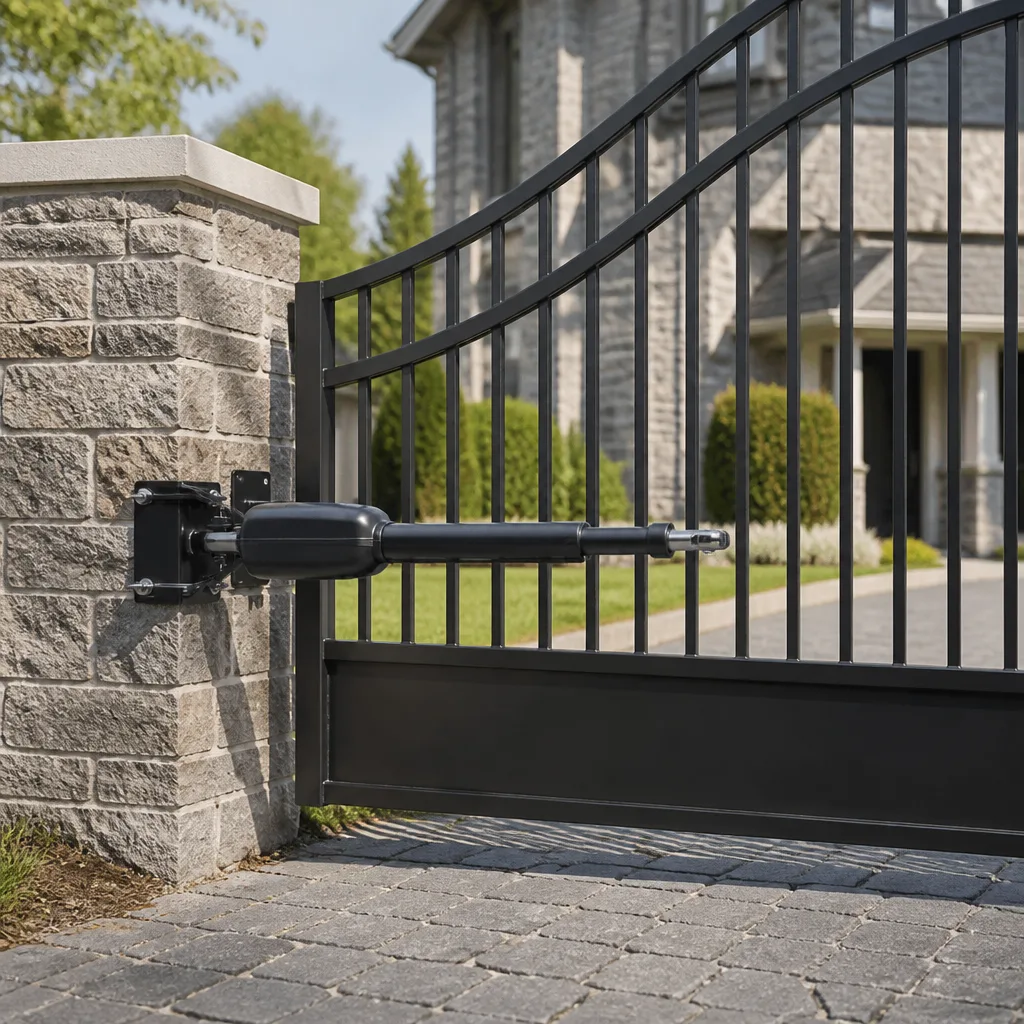
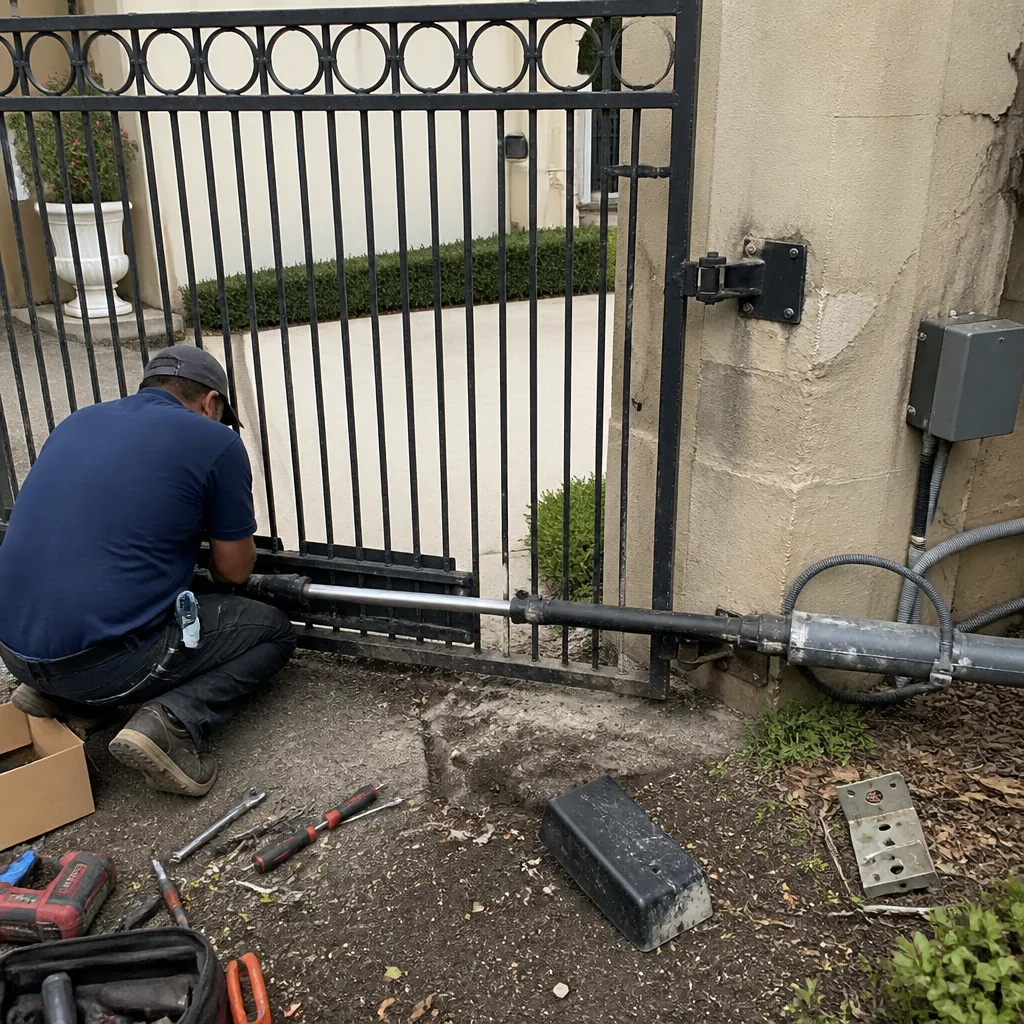 Before
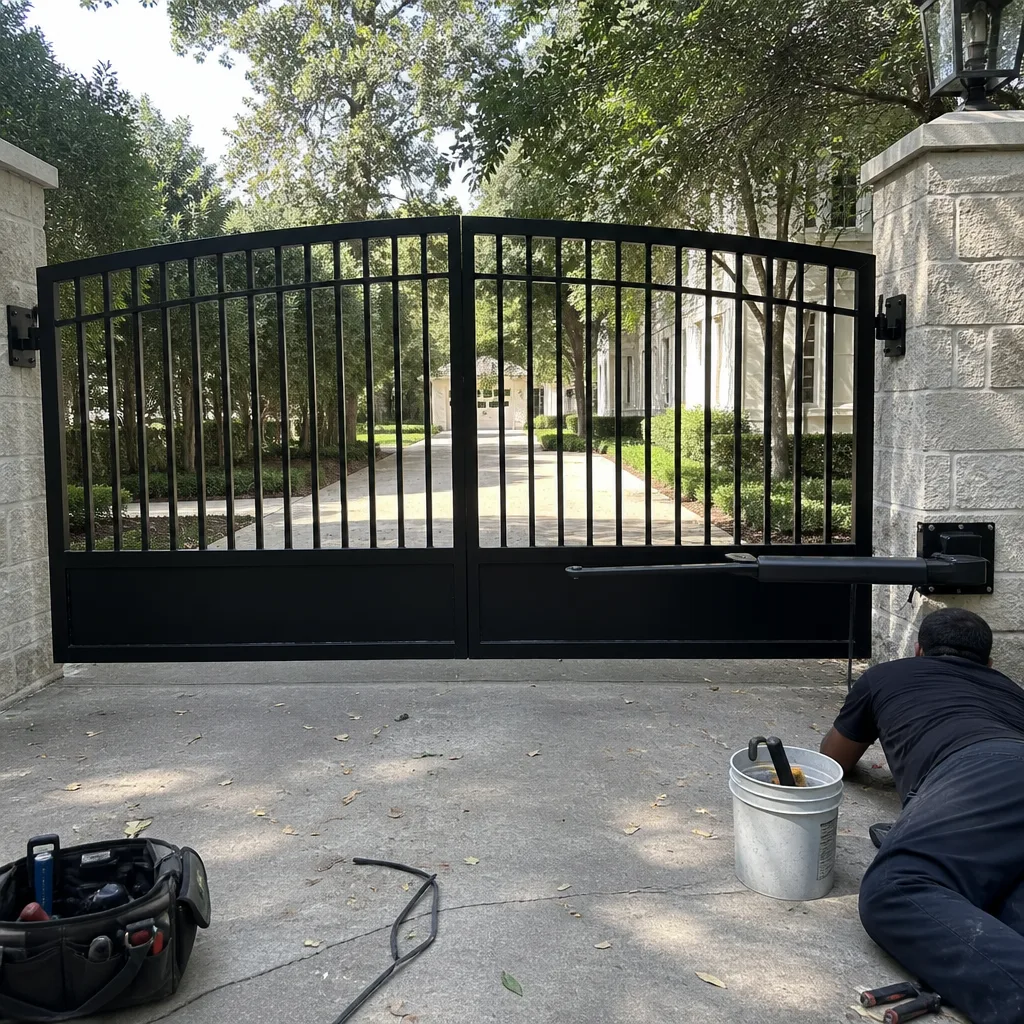 After
After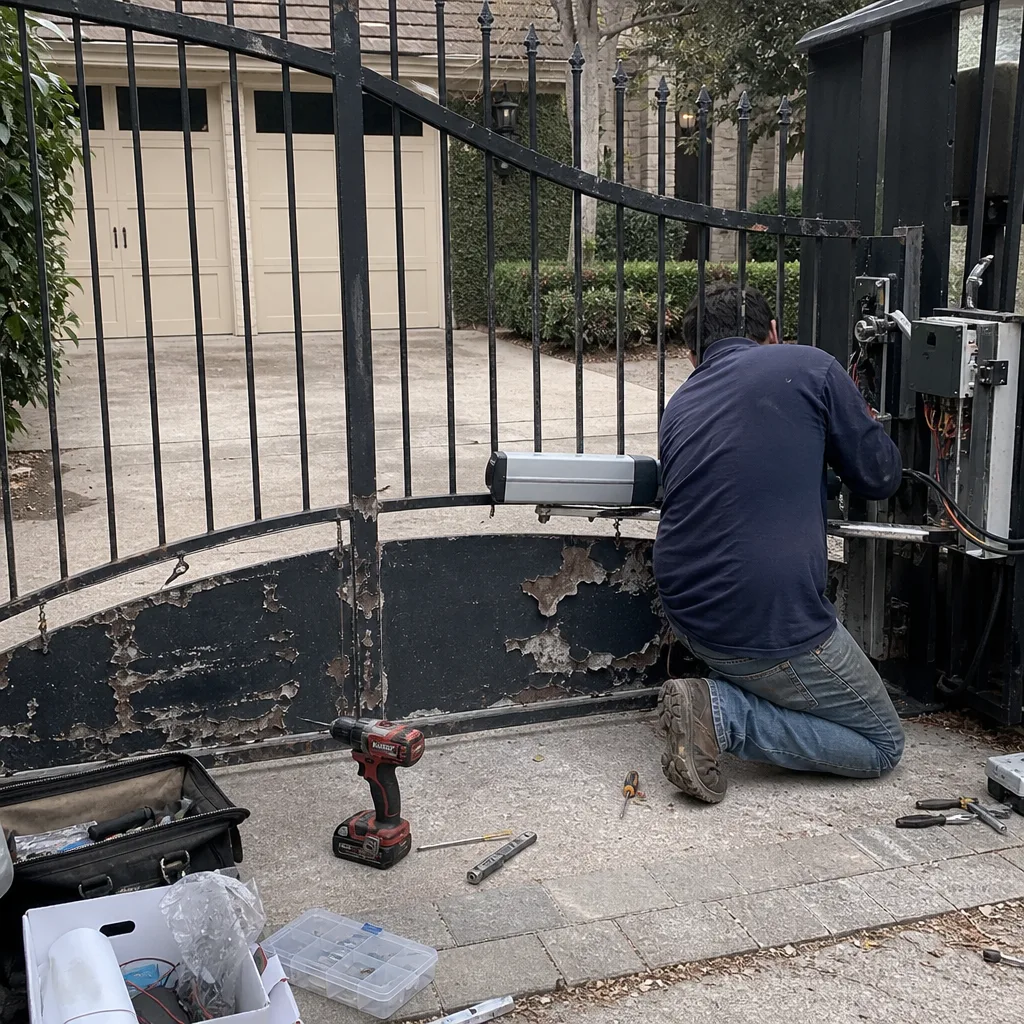 Before
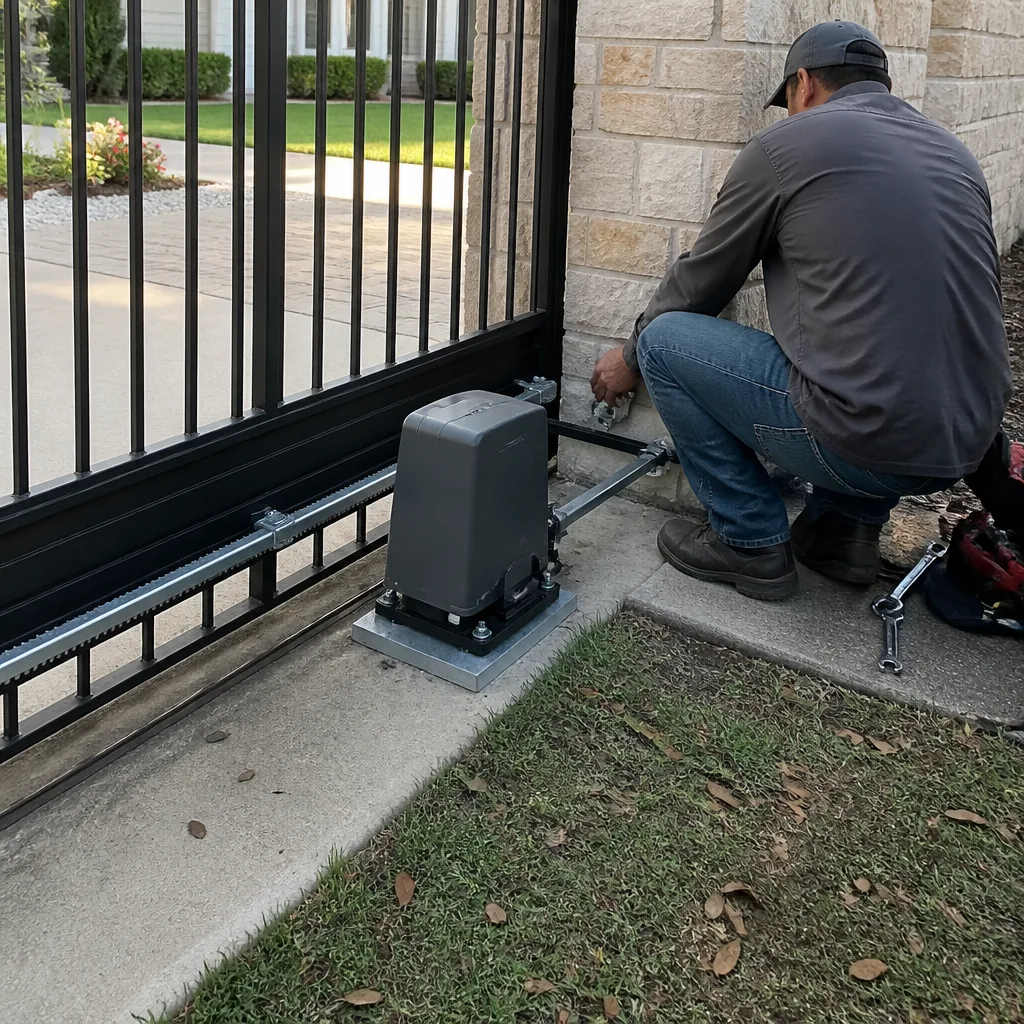 After
After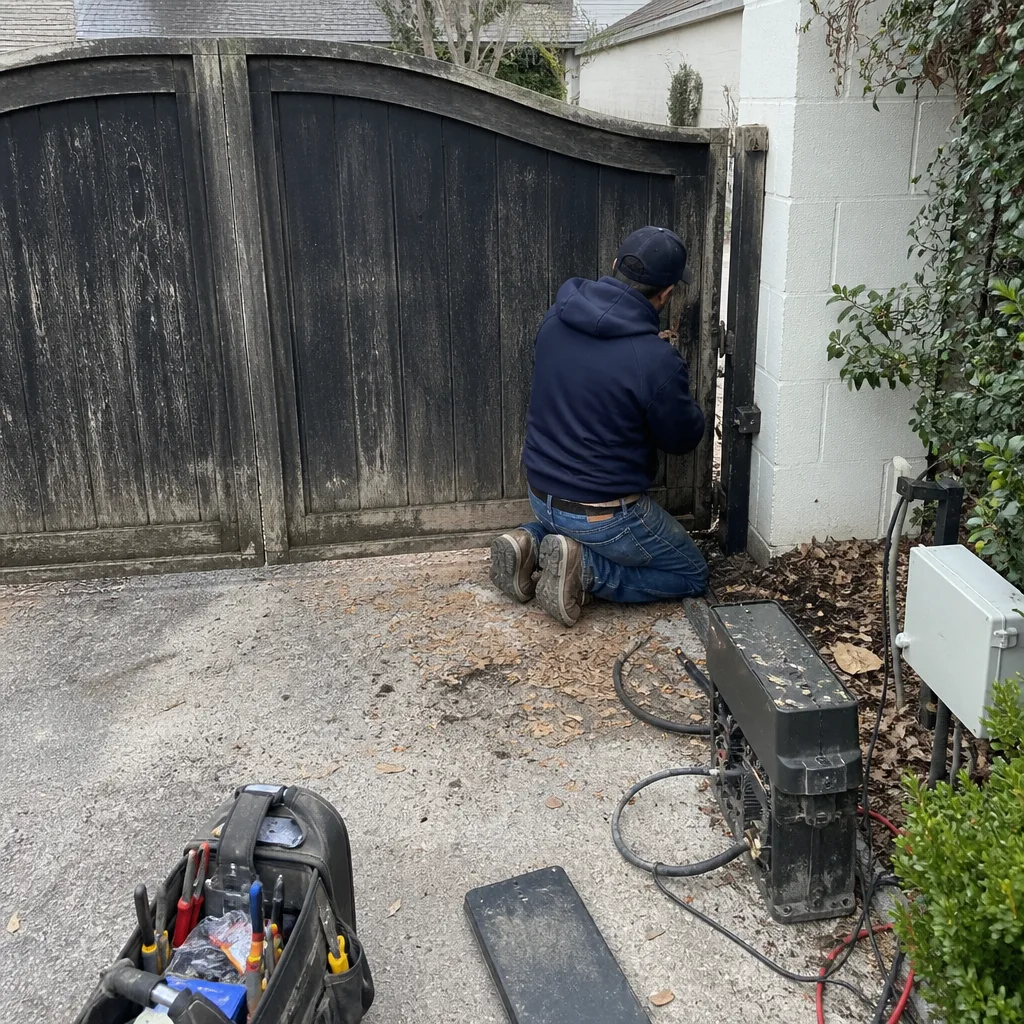 Before
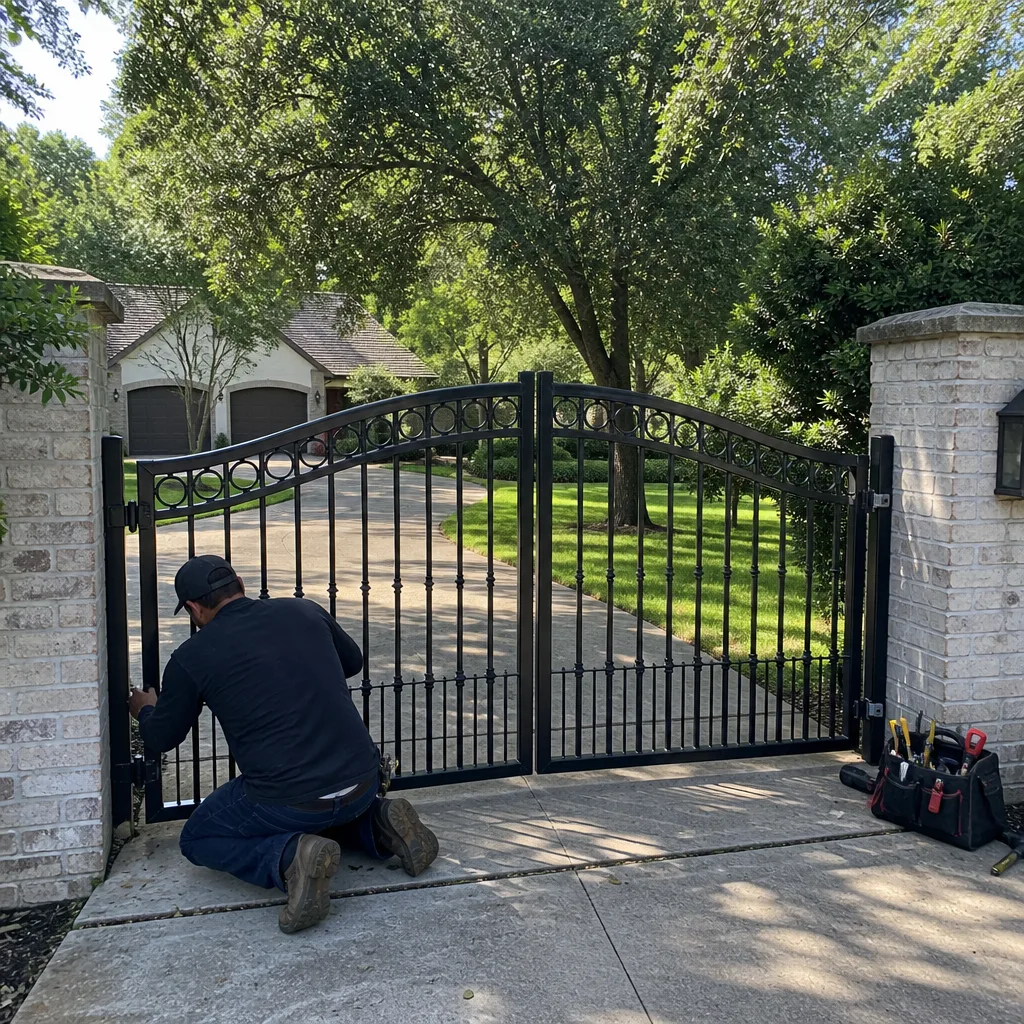 After
AfterSeasonal Gate Repair Care for University Park: Year-Round Homeowner’s Guide
Most homeowners in University Park don’t think about their gate until it stops working. That’s the expensive way to do it. A gate that gets fifteen minutes of attention each season will routinely outlast one that gets ignored for three years, and the repair bills tell the same story: a $40 hinge adjustment in March prevents a $900 motor replacement in August. This guide walks through what your gate needs in each season, what you can safely handle yourself, and when the smart move is to pick up the phone. Written from the perspective of a University Park gate shop that has seen every failure mode this climate can produce.
Quick Answer
Seasonal gate care in University Park means checking hinges, tracks, and opener components four times a year, with extra attention before summer heat and after fall leaf drop. Most homeowners can handle lubrication and visual inspections in about fifteen minutes per season. When a gate drags, binds, or makes new noises, call a professional before the motor burns out. A seasonal tune-up usually costs $89 in University Park through Ironworks Gate Co., and it catches problems while they’re still cheap to fix.
Table of Contents
- Winter: The Season of Contraction and Cold Soaks
- Spring: Post-Freeze Inspection and Rain Readiness
- Summer: Heat, Motor Stress, and the July Failure Spike
- Fall: Leaf Drop, Drainage, and Pre-Winter Prep
- What a Homeowner Can Safely Do: The 15-Minute Seasonal Check
- The Parts That Fail First in University Park
- What Seasonal Gate Repairs Actually Cost in University Park
- Common Mistakes to Avoid
- When to Call a Professional
- Frequently Asked Questions
Winter: The Season of Contraction and Cold Soaks
University Park winters are mild by national standards, but they’re not gentle on gate hardware. The freeze-thaw cycle is the real culprit. When temperatures dip below freezing overnight and climb into the 40s by afternoon, metal contracts and expands. Hinges that were snug in October develop play by February. Bolts back out a quarter turn at a time. Gate frames that were perfectly square drift until the latch no longer lines up with the post.
Cold weather also thickens grease. A gate that opens smoothly in July can crawl in January because the lubricant in the hinges and the opener’s gearbox has turned to the consistency of cold honey. The motor works harder to move the same weight, drawing more current and generating more heat than it should.
What we see in University Park during winter, in our experience: opener failures cluster in January and February, not because the cold kills motors directly, but because a gate that was already binding gets pushed past its limit when the cold adds resistance. The motor was fine. The hinge wasn’t. The motor paid for it.
Winter Checklist for University Park Homeowners
- Lubricate hinges and pivot points with a spray lubricant rated for cold weather. WD-40 is not a lubricant; use white lithium grease or a silicone-based product.
- Check the gate’s swing or slide path for cracks in the driveway concrete. Water gets in, freezes, expands, and makes the crack worse. That’s how a level track becomes a tilted one.
- Listen to the opener on the first cold morning. If it groans or labors, the gate is fighting something. Fix the resistance now, not in March.
- Test the safety edges and photo eyes. Cold can make photocell housings brittle, and a cracked housing lets moisture into the sensor.
One more University Park-specific note: homes with mature live oaks and pecan trees will see branch debris in the slide track all winter long. A twig jammed in the V-track at the wrong angle can derail a sliding gate entirely.
Spring: Post-Freeze Inspection and Rain Readiness
Spring in University Park means two things for a gate: residual damage from whatever winter did, and the beginning of heavy rain season. Both deserve attention before the summer heat arrives and makes every repair more unpleasant for the technician and harder on the equipment.
Start with a visual inspection of every weld. Hairline cracks from winter contraction often show up first at the hinge-side top corner of a swing gate, where the frame carries the most load. A crack the width of a fingernail is still a cheap welding fix. A crack that tears through after six more months of wind loading is a gate rebuild.
Rain readiness matters because University Park gets most of its annual rainfall between March and May, with a second wet push in October. The electronics on a gate opener live in a metal box, but they’re not immune to water. Check the control box seal. Look for rust blooms on the bottom lip. If the weep hole at the bottom of the box is clogged with dirt, clear it. A control board submerged in two inches of standing rainwater is a $600 parts bill.
Spring Inspection Sequence
- Open the gate fully and inspect the top and bottom hinges for sag. Push up on the latch end. If it moves more than an eighth of an inch, the hinge bushings are wearing.
- Walk the slide track and clear out winter debris. Check for areas where the track has shifted or the concrete has spalled.
- Open the control box and look for moisture, insect nests, or chewed wires. Ants love control boxes; so do rats.
- Test the auto-reverse with a rolled-up doormat or a cardboard box. If the gate doesn’t reverse on contact, the safety system is compromised.
- Run the gate five full cycles and listen for rhythmic clicking, grinding, or any sound that wasn’t there last year.
Spring is also the right time to schedule a seasonal tune-up. Ironworks Gate Co. offers an $89 Seasonal Tune-Up that covers this entire checklist plus a written condition report. Think of it as a physical for your gate, done before the season that breaks it.
Summer: Heat, Motor Stress, and the July Failure Spike
Summer is when University Park gates die. That’s not dramatic phrasing; it’s the pattern we see every year. Triple-digit days push electric motors to their thermal limits, and any existing problem, a dragging hinge, a partially seized roller, a gate that’s slightly out of square, compounds under heat until the motor overheats and trips its thermal protection or burns out altogether.
The physics: an opener motor has a duty cycle, typically around 20 to 30 percent. That means it’s designed to run for about two minutes out of every ten, then rest. A gate that takes 35 seconds to open instead of 25 because of a binding hinge is asking the motor to work 40 percent harder on every cycle. In 100-degree heat, with the motor housing already at 140 degrees from ambient temperature alone, that extra load is what pushes it past the thermal breaker.
UV exposure is the other summer killer. Polyurethane wheels on slide gates crack and delaminate after five or six University Park summers. Plastic covers on keypads and photo eyes go chalky and brittle. Rubber seals shrink. Every polymer component on a gate has a UV lifespan, and University Park uses it up faster than Dallas or Fort Worth because there’s less tree canopy and more direct western exposure on most properties.
Summer-Specific Failure Points
- Capacitors: electrolytic capacitors in opener control boards degrade faster in sustained heat. A weak capacitor means a motor that hums but won’t start.
- Solar gate openers: if your gate runs on solar, summer is when the battery bank gets overworked. Heat reduces battery capacity at the same time the gate needs more power.
- Chain drive slack: heat expands the chain. A chain that slaps against the rail instead of riding clean needs a half-link removal or tensioner adjustment.
- Infrared photo eyes: direct afternoon sun can blind a photo eye and cause phantom reversals. Adding a small hood or adjusting the angle usually fixes it.
If your gate opener is a Linear, Viking, or Ghost Controls unit, summer heat is the time to watch the thermal overload light. Each of these brands has slightly different protection logic, but all of them will shut down rather than burn up. If the gate stops working at 4 p.m. and works again at 9 p.m., the motor is telling you something. Listen to it.
Fall: Leaf Drop, Drainage, and Pre-Winter Prep
Fall in University Park is leaf season, and leaves are the most underrated gate enemy in this city. They don’t break anything directly. What they do is fill slide tracks, clog drain channels, and hold moisture against steel components that need to stay dry.
A slide gate’s V-track is a leaf trap. Pecan leaves and live oak leaves are small enough to wedge between the track and the gate’s bottom rollers, and when enough of them pack in, the gate rides up and off the track. A derailed slide gate is one of the most common October service calls we get in University Park. The fix is usually simple, reseat the gate on the track, but the damage to the motor from running against a jammed track isn’t always visible immediately.
Drainage matters because fall is University Park’s second rainy season. If the area around the gate post collects water, the post footing absorbs it. Sandy loam soil holds moisture well, which is good for lawns and bad for gate posts. A post that’s been wet-soaked for three months, then frozen for three nights, then wet-soaked again is a post that’s slowly losing its bearing capacity. Watch for a gate that sags toward the latch side in December. That’s the post moving, not the hinge.
Fall Prep Steps
- Clear the track weekly during peak leaf drop. A leaf blower takes thirty seconds.
- Check the weep holes at the bottom of steel gate frames. If they’re plugged, drill them out. Trapped water inside a gate frame rusts from the inside out.
- Inspect the control box gasket and replace it if it’s cracked. A $12 gasket prevents a $400 board replacement.
- Lubricate hinges and rollers before the first cold snap. Cold weather multiplies any resistance that exists now.
- Test the manual release on the opener. If you can’t operate the gate by hand, you’ll be stuck when the power goes out during an ice storm.
DoorKing openers, which are common on older University Park estate properties, have a mechanical release lever that gets stiff with disuse. Work it twice a year, spring and fall, and it’ll work when you actually need it.
What a Homeowner Can Safely Do: The 15-Minute Seasonal Check
You don’t need to be a gate technician to catch most problems early. What you need is a consistent routine and a baseline for what normal looks like. Here’s the fifteen-minute check we recommend every University Park homeowner do once per season.
- Stand at the latch end of a swing gate and lift. More than an eighth inch of play means the hinge bushings are worn. Less is fine; more is a fix-it-soon item.
- Run the gate and count the seconds. If it takes longer than it did last season, resistance is building somewhere. Time it, write the number down, and compare next season.
- Listen for changes in pitch. Grinding means metal on metal. Clicking means a chain or belt issue. Hissing is just the hydraulics working on some openers. Learn what your gate sounds like when it’s healthy.
- Look at the fasteners. A quick visual pass over the hinge bolts, track bolts, and post brackets with a wrench in hand. If a bolt turns easily, it was loose.
- Check the safety devices. Block the photo eye with your hand and run the gate. It should stop or reverse. Block the closing path and test the auto-reverse. If either test fails, stop using the automatic mode until it’s fixed.
Safety note: this check is visual and mechanical only. Do not open the control box and start probing terminals unless you know exactly what you’re doing. Gate opener capacitors hold a charge even with the power off, and a 24-volt control board can surprise you. Any electrical work beyond flipping the breaker should go to a trained technician. The same goes for counterweight springs on older wrought-iron gates: those springs hold serious tension, and a slip can take off a finger.
The Parts That Fail First in University Park
Some gate components are consumables. They have a known lifespan in this climate, and knowing what they are helps you plan for replacement instead of being surprised by it.
Hinge Bushings and Bearings
On a swing gate, the hinge bushings carry the full weight of the gate every second of every day. In University Park, with our combination of heat, humidity, and occasional freezing nights, bronze bushings typically last 5 to 8 years before they develop enough play to cause visible sag. Nylon bushings go faster, usually 3 to 5 years. When a bushing fails, the gate drops a fraction of an inch, and that fraction translates into a latch that doesn’t line up and a motor that strains on every cycle.
Slide Gate Rollers and Wheels
Slide gate wheels are the most-replaced component on University Park sliding gates. Polyurethane wheels crack from UV exposure and delaminate from their hubs. Steel wheels are more durable but noisier and harder on the track. Expect 4 to 6 years from quality polyurethane wheels, and half that from bargain replacements. When a wheel starts to wobble, replace it before it grinds a flat spot into the track. A track with a flat spot means the gate rumbles through that section forever or until you replace the whole track, which is a much bigger job.
Opener Gearboxes and Belts
Linear and Viking openers use gear-reduction setups that can develop play after 7 to 10 years of University Park heat cycles. The gearbox oil breaks down, the gears wear, and the classic symptom is a gate that’s noisy at one point in its travel. Belt-drive openers, including most Ghost Controls residential units, go through belts every 4 to 6 years. A belt that’s cracking at the tooth roots is a belt that’s about to strip.
Keypads and Photo Eyes
Exterior keypads live in direct sun and driving rain. The membrane switches inside a keypad degrade after 3 to 5 years of UV exposure, and the first sign is usually a key that takes two or three presses to register. Photo eyes suffer from sun glare and leaf interference, but they also just wear out. If a photo eye starts throwing false positives, it’s usually the emitter, not the wiring.
None of these failures are unexpected. They’re predictable wear items with predictable lifespans in this specific climate. The difference between a $200 repair and a $1,200 repair is usually just how long the worn part was allowed to stay in service after it started complaining.
What Seasonal Gate Repairs Actually Cost in University Park
Gate repair pricing in University Park is not mysterious, and you should never accept a quote that treats it like it is. Here’s what you should expect to pay for the most common seasonal repairs in this market. These are ranges based on the work we quote and perform in this area, not national averages.
| Repair | Typical Range in University Park | Notes |
|---|---|---|
| Hinge adjustment or bushing replacement (single gate) | $180 - $350 | Includes re-squaring the gate and aligning the latch. |
| Slide gate wheel replacement (one wheel) | $120 - $220 | Price varies by wheel type and gate weight. |
| Opener capacitor replacement | $150 - $250 | Parts and labor; usually a same-visit fix. |
| Control board replacement | $400 - $800 | Depends on opener brand; DoorKing boards run higher. |
| Safety photo eye replacement (pair) | $180 - $300 | Includes alignment and testing. |
| Full seasonal tune-up | $89 | Ironworks Gate Co. flat rate, all seasons. |
| Track repair or section replacement | $300 - $900 | Depends on track length and damage extent. |
| Weld repair (crack, not a rebuild) | $150 - $400 | Mobile welding, done on site. |
Every price we quote is settled before any work begins. You’ll know the number, you’ll agree to the number, and that’s the number on the invoice. No discovery charges, no surprise line items, no “while we were in there” add-ons. If the gate needs more than the quote covers, we stop and call you before doing the work. That’s how a square deal works.
Ironworks Gate Co. also honors a permanent 5% Senior and Veteran discount on every job, and we offer $50 off any repair over $250. If you’ve already got a written estimate from another company, bring it in: we provide a free second opinion on any written estimate, because seeing another company’s numbers is the fastest way to find out if you’re being charged fairly.
Common Mistakes to Avoid
- Waiting until the gate stops opening. By the time a gate fails completely, the root cause has usually been building for months. The hinge was sagging, the motor was laboring, the belt was cracking. Every one of those had a cheaper fix than the eventual breakdown.
- Using WD-40 on hinges and rollers. WD-40 is a water displacer, not a lubricant. It strips existing grease and leaves the joint drier than before. Use white lithium grease or a spray silicone.
- Ignoring a noisy gate. Gates don’t suddenly become noisy for no reason. A new grind, squeak, or rattle is a mechanical signal. The gate is telling you something is wrong. Write down when it started and what conditions trigger it; that information saves a technician real diagnostic time.
- Adjusting the opener force settings to “fix” a dragging gate. When a gate starts dragging and the owner turns up the opener’s force limit so it’ll push through, the motor is being overdriven. The gate might move, but the motor is now working beyond its rated load. Force settings should never be used to compensate for mechanical resistance.
- Skipping the manual release test. If the power goes out and you can’t operate your gate by hand, you’re locked out of your own driveway. Test the manual release twice a year. It takes thirty seconds and it’s the difference between a minor inconvenience and a serious problem during a University Park ice storm.
- Buying cheap replacement parts online. A $40 set of import gate wheels on Amazon will get you about a year before the bearings fail and the wheel delaminates. Quality hardware from a supplier that stands behind it lasts three to five times longer. The cheapest parts are the most expensive ones.
- Leaving leaves in the track all winter. Packed leaf matter holds moisture against the wheels and track, accelerating corrosion and creating a surface for the wheels to skid on. Thirty seconds with a leaf blower every week during fall beats a track repair in spring.
When to Call a Professional
Some jobs are homeowner jobs. Some aren’t. Here’s the line: if the problem involves electricity, tension, welding, or a gate that won’t stay square, call someone who does this every day.
Specific scenarios where you should not attempt the repair yourself: any opener electrical issue beyond flipping a breaker, counterweight spring removal or replacement, bent or cracked gate frame members, a slide gate that has jumped its track and won’t reseat by hand, and any gate repair that requires removing the gate from its posts. These are the jobs where an amateur can turn a $300 repair into a $3,000 rebuild, or worse, a trip to the emergency room.
Ironworks Gate Co. offers free estimates in University Park. Call (936) 259-0479, describe what’s happening, and we’ll send a background-checked, uniformed technician who will look at the gate, tell you what’s wrong, and hand you a written price before any work starts. If it’s not right, our 90-Day Done Right Promise means we come back and make it right. Written guarantee, no hassle, no arguing. For more about how we work, start at the Ironworks Gate Co. home page.
Frequently Asked Questions
A seasonal gate tune-up costs $89 through Ironworks Gate Co. in University Park, and it covers hinge and roller lubrication, track cleaning, control box inspection, safety system testing, and a written condition report. Call (936) 259-0479 to schedule one.
For most common repairs, yes. The majority of our University Park gate repairs are completed in a single visit, because we stock the wear parts and opener components for the brands most common in this area: LiftMaster, FAAC, BFT, Linear, Viking, Ghost Controls, DoorKing, Elite, and Mighty Mule. A live person answers the phone 24 hours a day, 7 days a week, so you’ll get a straight answer when you call.
That pattern, working in the morning and failing in the afternoon heat, almost always points to a motor overheating against excess mechanical resistance. The gate was already dragging, the afternoon heat pushes the motor past its thermal limit, and the thermal protection shuts it down until the motor cools. The fix is not a new motor; it’s finding and eliminating the drag.
Lubricate hinges and rollers every three months, using white lithium grease or spray silicone, not WD-40. In University Park’s climate, the summer heat breaks down lubricants faster than the cold does, so the pre-summer lubrication in May is the most important one of the year.
A full gate installation from Ironworks Gate Co. includes the gate itself, posts, hinges, the opener matched to the gate’s weight and usage, safety photo eyes, keypad or access control if requested, and the electrical run to the opener. Every installation includes our 90-Day Done Right Promise in writing, and the price is quoted upfront before any work begins. Installations are measured, ordered, and scheduled. Call (936) 259-0479 for a free measure and a written price.
Yes. Every Ironworks Gate Co. installation includes the low-voltage and line-voltage electrical work plus safety photo eyes and auto-reverse testing, all done by our own technicians. We don’t subcontract the electrical, and we don’t leave a gate running without its safety system tested and verified.
A well-built wrought iron or steel gate from 25 years ago is often worth repairing, because the steel itself is typically better than what’s sold at entry-level prices today. The decision comes down to the condition of the frame and posts. If the steel is sound and the posts are solid, new hinges, new rollers, and a new opener can give that gate another 20 years of service. If the frame is rusting through at the bottom rail or the posts are moving, replacement is the smarter money. We’ll tell you honestly which one you’re looking at, because we’d rather earn a customer for the next 20 years than sell you a gate you didn’t need.
The Bottom Line
Seasonal gate care in University Park is fifteen minutes per season and a phone call when something changes. The pattern is simple: lubricate before summer, clear leaves in fall, inspect for freeze damage in spring, and listen for new noises year-round. Most gate failures are not surprises; they’re ignored warnings. The hinge that sagged in April is the motor that burned out in August. If you catch problems early, gates in this climate can run reliably for decades. If you don’t, the repair bills arrive all at once. Ironworks Gate Co. has been doing this work right for over 42 years, founded in 1984, and we plan to be here for another forty. Done right, and backed in writing. Call (936) 259-0479 for a free estimate, any season, any time.
Written by Victor Salinas, Owner at Ironworks Gate Co., serving University Park since 2013.