
Last updated August 25, 2026
Free on-site gate assessment - hinges, posts, and your LiftMaster or Nice gate operator checked before anything is quoted
The assessment is free and the quote is the invoice.
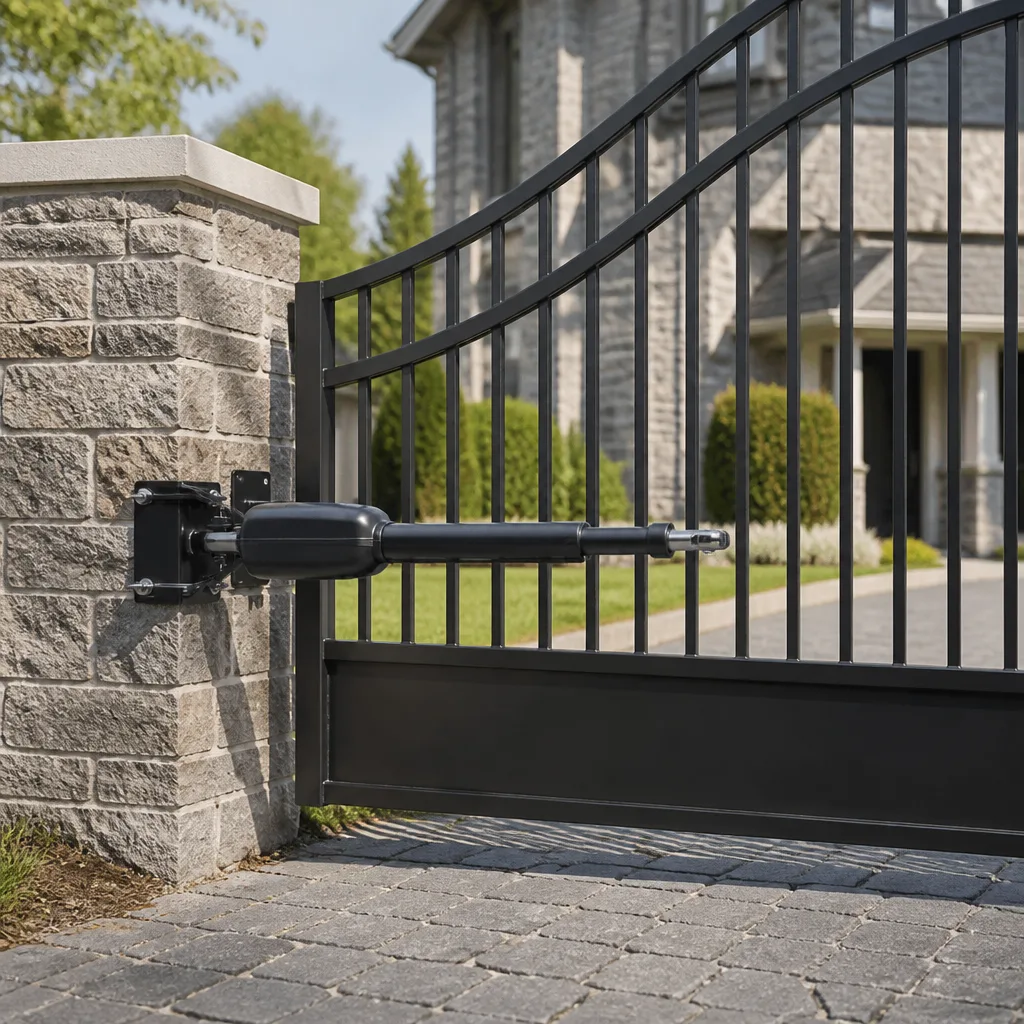
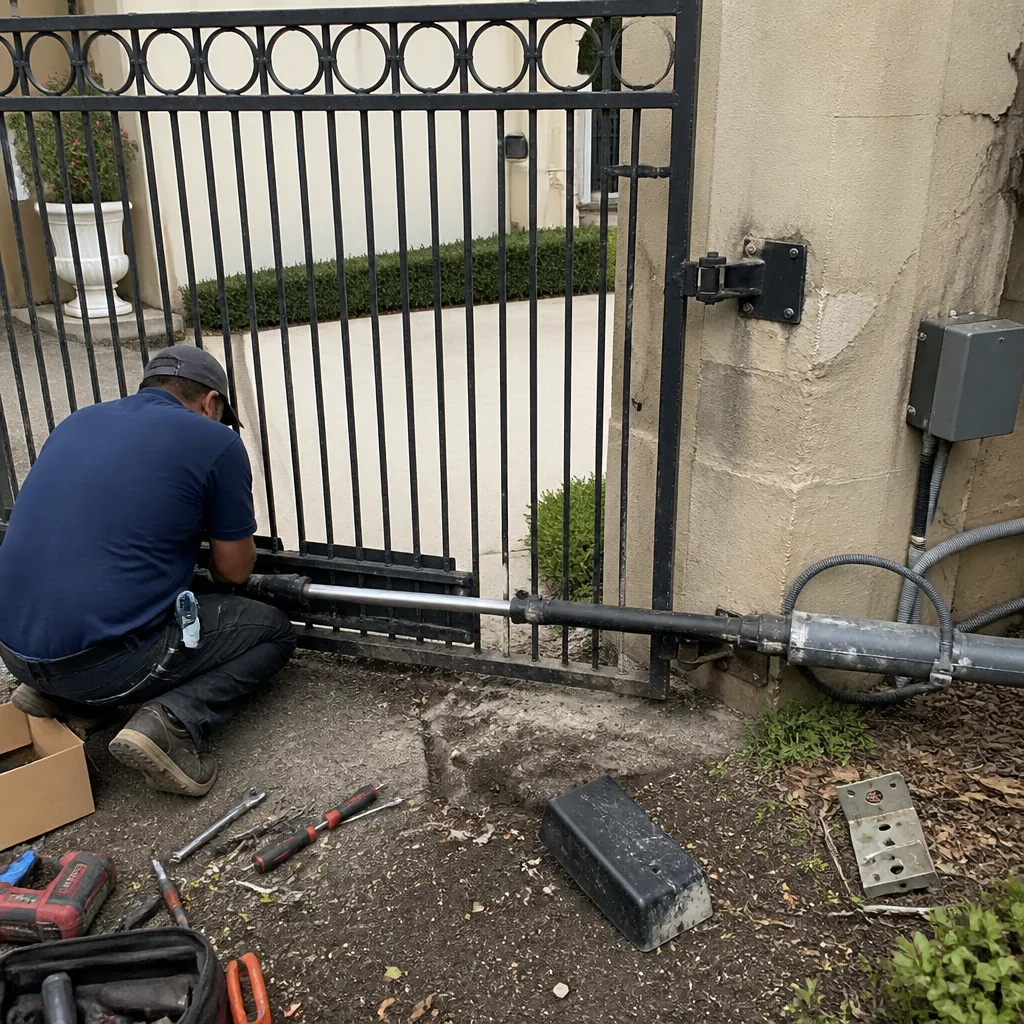 Before
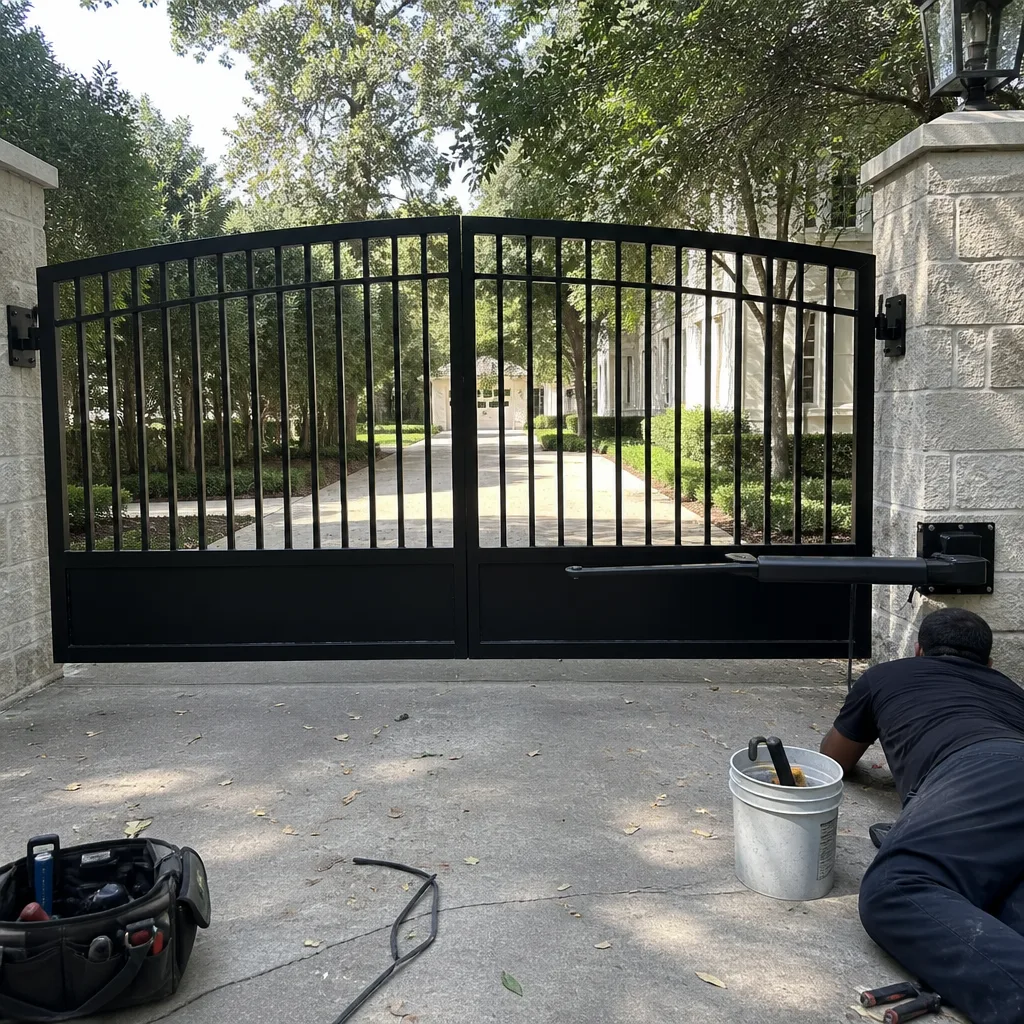 After
After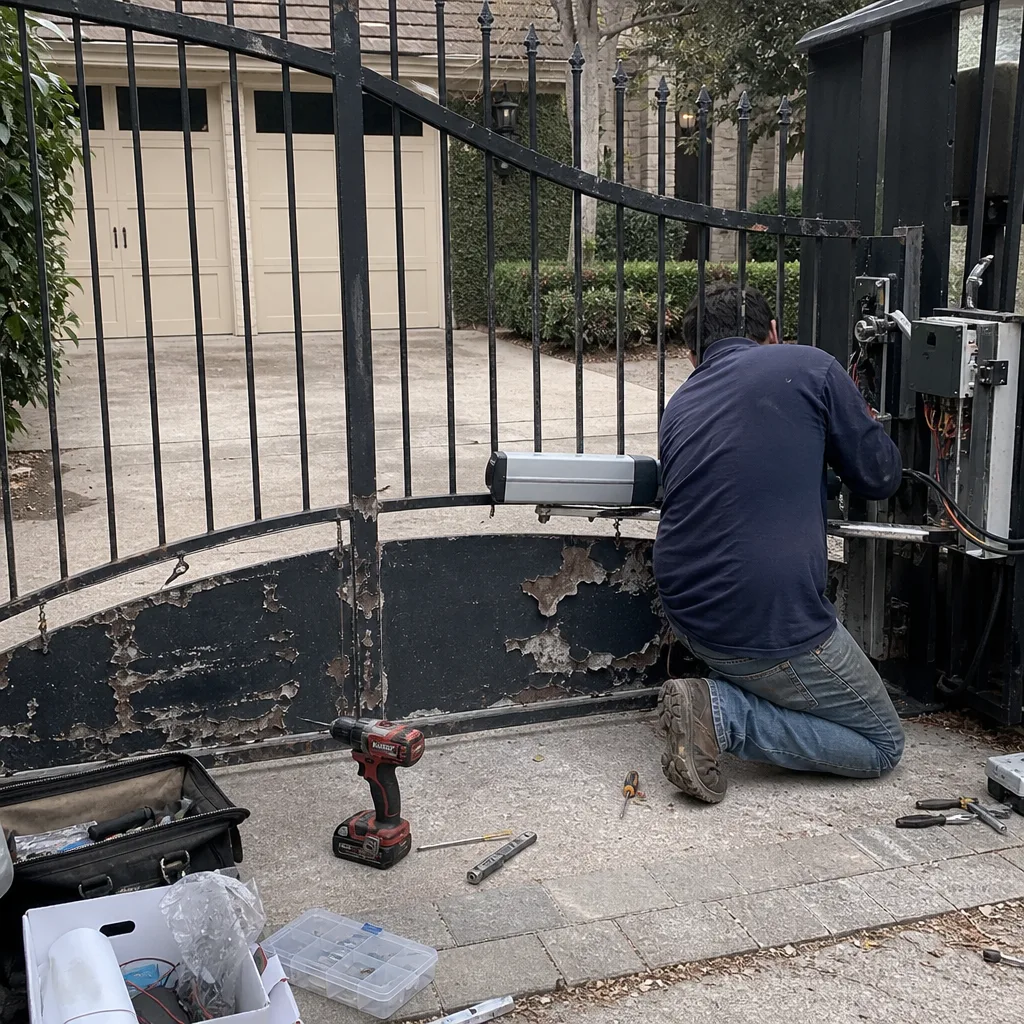 Before
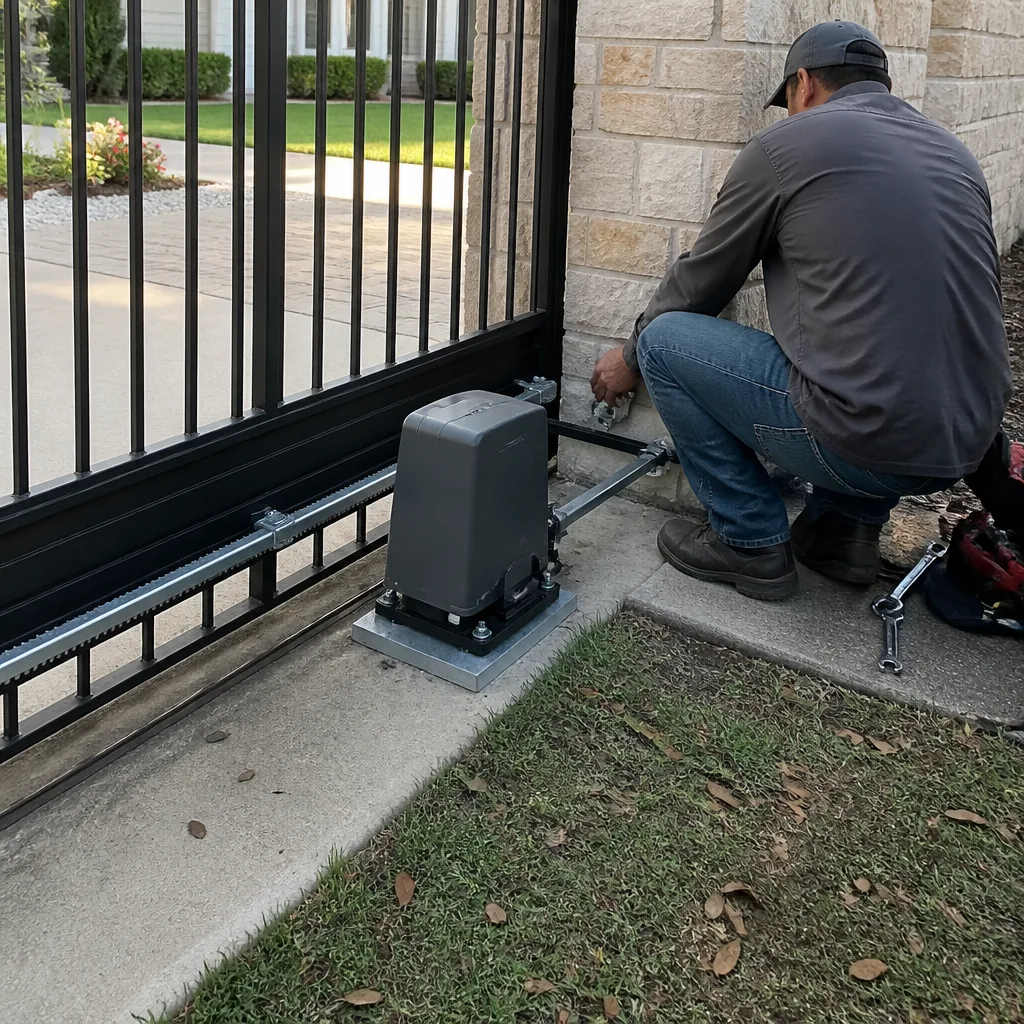 After
After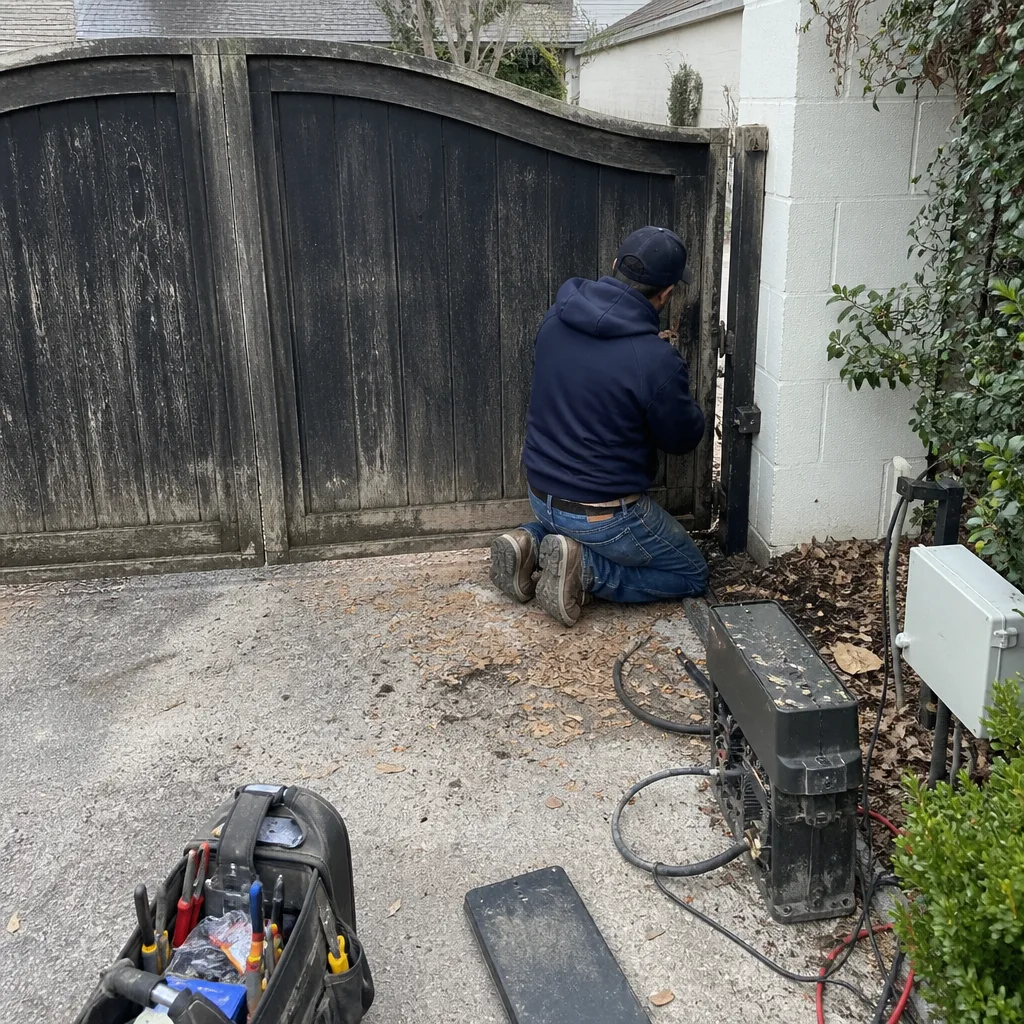 Before
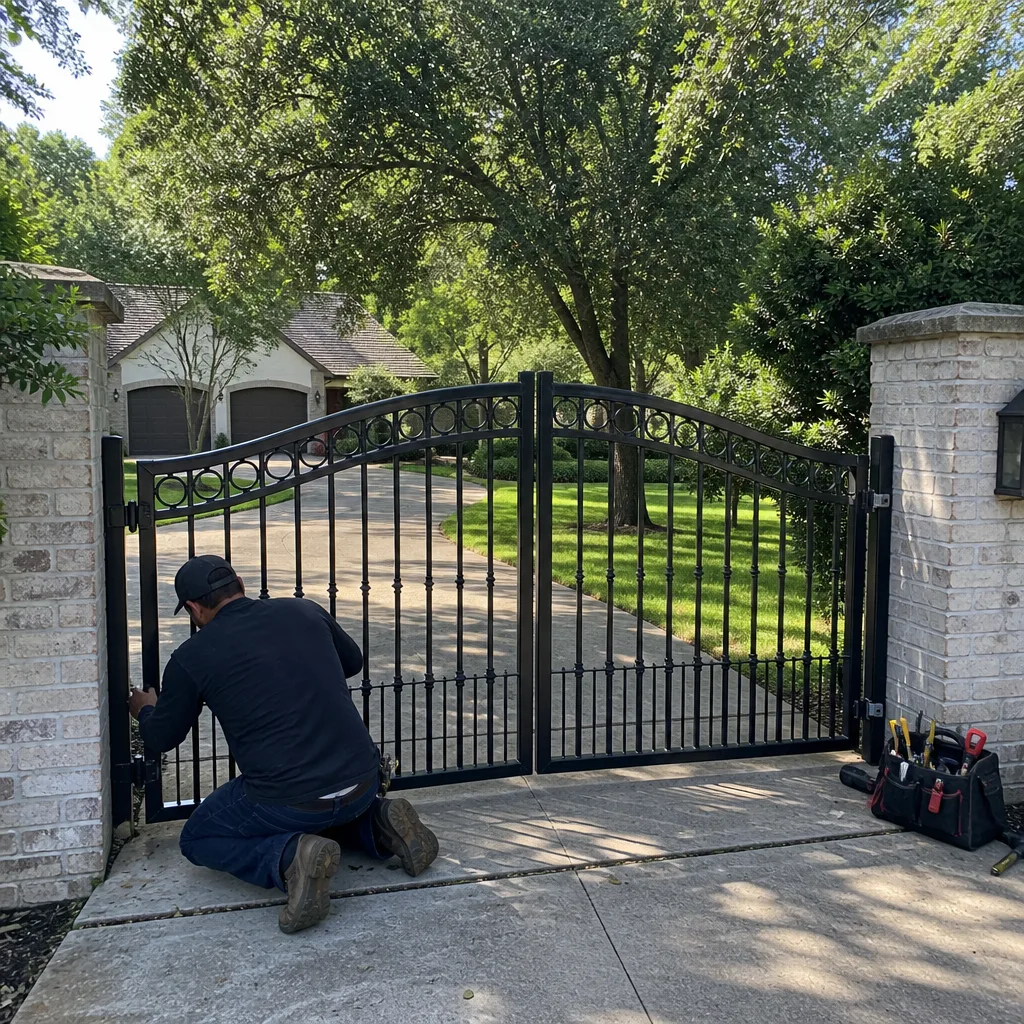 After
AfterGate Repair Permits, Codes & Inspections in TX: What You Need to Know
Most homeowners in University Park are surprised to learn that Texas treats residential driveway gates differently from almost every other type of home improvement. A fence might need a permit. A gate often does not. The state’s approach to gate regulation splits cleanly down the middle: the physical gate itself falls under general property improvement rules, while the operator that moves it falls under a stricter set of standards. This guide walks through what actually requires paperwork in Texas, which codes apply to gate safety, when an inspection might be triggered, and what you can handle without ever calling City Hall.
Quick Answer
In Texas, most residential gate repairs do not require a permit, but any new electrical connection to a gate operator does. The physical gate, hinges, and welded repairs are generally unregulated at the state level, while automated gate systems must comply with UL 325 safety standards and may require inspection if power is being run from the house. In University Park, the biggest practical requirement is that all electrical work be done to current NEC code by a licensed electrician.
Table of Contents
- Do You Need a Permit to Repair a Gate in Texas?
- Texas Gate Codes: What Actually Applies
- Electrical and Gate Operator Requirements
- The UL 325 Safety Standard, Explained Plainly
- When Do Gate Inspections Happen in Texas?
- University Park and Dallas County Specifics
- HOA and Deed Restriction Considerations
- Common Mistakes to Avoid
Do You Need a Permit to Repair a Gate in Texas?
Here is the direct answer: repairing an existing gate, including welding a broken hinge, replacing a bent post, or swapping out a worn opener arm, does not require a permit in Texas. The state does not issue gate permits, and most municipalities, including University Park and the surrounding Dallas County cities, follow the International Residential Code, which does not classify gate repair as a regulated activity.
Where permits do enter the picture is on the electrical side. If your gate operator needs a new power line run from the house, a new outlet installed at the gate, or a circuit added to your breaker panel, that work requires an electrical permit. The state of Texas licenses electricians for exactly this reason. A gate company can repair and replace the operator itself, but the electrical feed belongs to a licensed electrician.
Some homeowners ask whether a full gate installation requires a permit. The answer depends on your city. In University Park, a new gate installation typically does not require a building permit unless the gate is attached to a structure that itself requires permitting, such as a new fence over eight feet tall or a masonry column that exceeds local height limits. The gate itself, as a movable barrier, falls outside the permit scope in most cases.
What about commercial properties? The rules shift there. A commercial gate, especially one that controls vehicle access to a business or a multi-family community, may fall under fire code requirements for emergency access. We have seen commercial clients in University Park need to submit gate plans to the fire marshal when the gate controls access to a fire lane. That is a different animal from a residential driveway gate.
When a Permit Is Actually Required
- New electrical circuit: Running power from your home’s panel to a new gate operator location requires an electrical permit and a licensed electrician.
- New outlet installation: Adding a GFCI outlet at the gate for an operator or lighting requires a permit.
- Commercial gate installation: May require zoning review or fire marshal approval depending on the property’s access configuration.
- Masonry columns over local height limits: If your University Park gate includes stone or brick columns taller than the city allows without a fence permit, that triggers a permit.
If your repair is limited to the gate itself, the hinges, the wheels, the opener, the keypad, or the sensors, you are clear of permitting requirements. That covers the overwhelming majority of what we do.
Texas Gate Codes: What Actually Applies
Texas does not have a single state-level gate code. What governs gate work here is a patchwork of national standards that Texas has adopted by reference, plus local ordinances. Here is what actually applies to a residential gate in University Park:
The Codes That Govern Texas Gates
- UL 325: This is the big one. UL 325 is a national safety standard from Underwriters Laboratories that sets requirements for automatic gate operators. Any gate opener sold or installed in the United States must comply with UL 325. It is not a Texas law per se, but every manufacturer builds to it, and every reputable installer follows it.
- ASTM F2200: This standard from the American Society for Testing and Materials covers gate construction, including requirements for gate clearance, entanglement protection, and pedestrian separation. If a gate is going to be automated, ASTM F2200 applies.
- National Electrical Code (NEC): Texas adopted the NEC statewide for all electrical work. Article 430 covers motors, and Article 300 covers wiring methods. Any power run to a gate operator must meet NEC requirements.
- International Residential Code (IRC): University Park and most Texas cities use the IRC as their baseline building code. The IRC does not regulate gates directly, but it does govern the electrical work, the fence height, and the setback requirements that affect where a gate can sit.
What surprises many homeowners is that there is no Texas law requiring a gate to be inspected after installation. The state trusts the installer to follow the standards. That is a double-edged sword. A homeowner who hires someone who does not know UL 325 requirements gets a gate that may be unsafe, and there is no inspector coming to catch it. We have repaired gates in University Park where the original installer never installed a single safety edge or photo eye, and the homeowner had no idea anything was missing.
Electrical and Gate Operator Requirements
The electrical side of gate work in Texas is where most homeowners get tripped up. Here is what the NEC and standard practice require for a residential gate opener in University Park:
- Dedicated circuit: A gate operator should run on its own circuit. Sharing a circuit with landscape lighting or an irrigation controller causes nuisance tripping and shortens the life of the motor and the control board.
- GFCI protection: Any outlet serving a gate operator must be GFCI-protected. This is an NEC requirement for outdoor receptacles in damp or wet locations, and it applies even if the outlet is inside a weatherproof box.
- Weatherproof enclosure: The outlet box must be rated for outdoor use with an in-use cover. We have seen operators in University Park fail because a standard interior outlet cover let moisture into the connection.
- Conduit, not bare wire: Any wiring run underground to a gate must be in conduit rated for direct burial. Bare UF cable is not permitted by the NEC for this application.
- Proper grounding: The operator chassis must be grounded. This is non-negotiable and protects both the equipment and anyone touching the gate.
If your gate operator is solar-powered or runs on a low-voltage battery system, the NEC rules are different. Low-voltage systems under 30 volts are generally exempt from the permit and conduit requirements, though the wire still must be rated for burial if it runs underground. Many of the operators we service in University Park, including models from Linear and Ghost Controls, offer solar options that sidestep the electrical permit entirely.
The UL 325 Safety Standard, Explained Plainly
UL 325 is the rulebook for gate safety. If you remember only one thing from this entire guide, remember this: an automated gate must not be able to injure a person who is in its path. That is the entire point of the standard, and it is achieved through a specific set of required safety devices.
UL 325 divides gate operators into four classes based on where they are installed. A residential driveway gate in University Park is a Class I operator. A commercial or multi-family gate is Class II, III, or IV, depending on access. The class determines which safety devices are mandatory.
Required Safety Devices for a Residential Gate
- Entrapment protection: The operator must have a primary entrapment protection device, which is typically a reversing mechanism that senses resistance and reverses the gate. This is built into every UL 325-compliant operator, including ones from Viking and DoorKing we install regularly.
- Secondary entrapment protection: In addition to the reversing mechanism, a residential gate must have at least one secondary device. This is almost always photo eyes, which create an invisible beam across the gate opening. If anything breaks the beam while the gate is closing, the gate reverses.
- Warning signs: Every automated gate must display warning signs on both sides. This is a UL 325 requirement and one of the most commonly skipped steps on DIY installations.
- Pedestrian separation: If the gate is the only access point to the property and pedestrians must walk through the vehicle gate, ASTM F2200 requires a separate pedestrian gate or a protected pedestrian path. This catches many University Park homeowners off guard, especially on smaller lots where the driveway gate is the only entrance.
The practical lesson from UL 325 is that a gate opener is not a garage door opener on a hinge. The forces are different, the failure modes are different, and the safety requirements are different. We have been called to University Park homes where a homeowner installed a Mighty Mule opener from a big-box store, skipped the photo eyes because the instructions were unclear, and the gate closed on a car door. The fix was straightforward, but the damage was already done.
When Do Gate Inspections Happen in Texas?
The short answer is that residential gate inspections are rare in Texas. The state does not mandate them, and most cities, including University Park, do not require a gate inspection as a condition of completion. Here are the scenarios where an inspection might actually occur:
- Electrical inspection: If a permit was pulled for the electrical work, the city will send an inspector to verify the wiring before the circuit is energized. This is the most common gate-related inspection in University Park.
- New construction: If the gate is part of a new home build or a major renovation that already has open permits, the gate may be included in the final inspection scope, particularly if it is automated.
- HOA-required inspection: Some University Park HOAs require an inspection of any exterior modification, including a new gate, before they will approve it. This is a private inspection, not a city one.
- Fire marshal review: For commercial properties, the fire marshal may inspect a gate to verify that emergency access is not blocked. This does not apply to single-family homes.
What this means in practice: if you are repairing an existing gate, you will likely never see an inspector. If you are installing a new powered gate that requires new electrical work, you will see an electrical inspector when the electrician’s permit is closed out. That inspection is about the wire, the conduit, the GFCI, and the grounding, not about the gate itself.
University Park and Dallas County Specifics
University Park sits inside Dallas County and has its own municipal code, which follows the IRC with local amendments. The city is known for strict enforcement of property appearance standards, and that affects gate work in ways that are not obvious.
First, University Park has stricter rules than most surrounding cities on fence and wall height. A residential fence over eight feet generally requires a variance, and a gate that is part of a fence over that height will be scrutinized. If you are replacing a gate in University Park and the existing gate is grandfathered, the city generally allows repairs that do not increase the height or change the footprint.
Second, the city is particular about setback lines. A driveway gate that sits too close to the street can create issues with right-of-way access, especially if the gate swings outward toward the street. In University Park, most driveway gates swing inward for exactly this reason.
Third, the local electrical inspection process is handled through the city’s building department, which requires a licensed electrician for any permit work. Homeowners cannot pull an electrical permit for their own gate wiring in University Park. This is a city rule, not a state one.
Dallas County itself does not add another layer of gate regulation. The county handles unincorporated areas, but University Park is fully incorporated, so city rules are the only local rules that apply. We have worked in University Park long enough to know which jobs will trigger a city conversation and which ones will not, and we tell homeowners upfront before any work begins.
HOA and Deed Restriction Considerations
In University Park, the HOA or deed restrictions are often a bigger hurdle than any city permit. Many of the neighborhoods here have active architectural review committees that must approve exterior changes before work begins. A gate is an exterior change, and some HOAs are particular about it.
Here is what we tell our University Park customers about HOA considerations:
- Check before you commit: A call to your HOA’s architectural committee costs nothing and takes ten minutes. Finding out after the gate is installed that the style or material was not approved is an expensive fix.
- Material restrictions: Some University Park HOAs require that any new gate match the existing fence material and finish. A wrought-iron gate against a cedar fence may need to be painted to match, or vice versa.
- Automation rules: A few HOAs in the area have restrictions on gate operators, specifically around noise and operating hours. This is worth checking if your gate is close to a neighbor’s bedroom window.
- Repair vs. replacement: Most HOAs treat a repair of an existing gate as exempt from review. A full replacement, especially one that changes the appearance, is where review kicks in.
We have handled enough HOA-sensitive gate jobs in University Park to know the questions to ask early. It saves everyone time and money.
Common Mistakes to Avoid
- Skipping the photo eyes on a DIY opener install: UL 325 requires secondary entrapment protection. Skipping it creates a safety hazard and voids the manufacturer’s warranty. We have corrected this on more University Park gates than we can count.
- Running unprotected wire underground: Burying standard indoor wire without conduit fails NEC requirements and leads to shorts within a few years, especially in Dallas County’s clay-heavy soil, which holds water against the wire jacket.
- Assuming a gate permit is required when it is not: Some homeowners delay a needed repair because they think City Hall has to approve it. A broken hinge does not need a permit in University Park. Fix it now.
- Assuming no permit is needed when one is: The flip side. Running a new circuit to the gate without an electrical permit can cause problems at resale, when the buyer’s inspector flags an unpermitted circuit.
- Installing a gate that blocks the sidewalk or right-of-way: In University Park, an outward-swinging gate that crosses the sidewalk is a liability and a code issue. Gates should swing inward or be set back far enough to clear the public walk.
- Using an interior-rated outlet cover at the gate: This is a small thing that fails regularly. The Texas climate, with its humidity and driving rain in spring, demands an in-use weatherproof cover. Standard covers let water in and trip the GFCI.
- Ignoring the pedestrian access requirement: If your automated gate is the only way into the yard, and there is no separate walk gate, you are out of compliance with ASTM F2200. This is common on older University Park lots with narrow frontages.
When to Call a Professional
Some gate work is genuinely DIY-able. Replacing a keypad, adjusting a hinge, even swapping an opener arm are within a handy homeowner’s reach. But any job that involves running new electrical, welding structural components, or replacing a gate operator on a heavy gate is where a professional earns their keep. A 400-pound iron gate under spring tension is not the place to learn as you go. We have straightened out enough DIY gate mishaps in University Park to say that with confidence. Ironworks Gate Co. offers free estimates in University Park, and we are glad to look at any gate before you decide whether it is a job for us or a weekend project for you. Call (936) 259-0479 and we will come out, take a look, and give you a straight answer with no obligation. See what we do on the Ironworks Gate Co. home page for the full scope of our gate services.
Frequently Asked Questions
No. Gate repairs, including hinge replacement, welding, opener replacement, and keypad work, do not require a permit in University Park or anywhere else in Texas. The only exception is if the repair includes new electrical work, which requires an electrical permit handled by a licensed electrician.
UL 325 is a national safety standard that governs automatic gate operators. It applies to every powered residential gate in Texas, including yours. It requires entrapment protection, warning signs on both sides of the gate, and compliance with ASTM F2200 for gate construction.
You can, and many homeowners do. But a DIY opener install that skips the required photo eyes, uses improper wiring, or fails to post warning signs is unsafe and voids the manufacturer’s warranty. If the install includes new 120-volt electrical work, a licensed electrician must do that portion in University Park.
Most gate repairs in University Park run between $180 and $500 depending on the part and the labor involved. Opener replacement on a standard single driveway gate typically runs $700 to $1,400 installed. We quote every job before work starts, so the number you hear is the number you pay. Call (936) 259-0479 for an exact quote, and ask about our current offers, including $50 off any repair over $250.
In many University Park neighborhoods, yes. If the replacement changes the appearance, material, or height of the gate, most HOAs require architectural review before the work begins. A repair that restores the gate to its original condition is usually exempt. Check with your HOA first, and we will match the gate to whatever they approve.
An electrical inspection for gate wiring in University Park typically takes 15 to 30 minutes on site. The inspector verifies the conduit, the GFCI protection, the grounding, and the junction box. Once it passes, the city closes the permit and the work is done. Schedule it through your electrician, who will coordinate with the city.
The Bottom Line
Gate repair in Texas is simpler on the permit side than most homeowners expect, and stricter on the safety side than many realize. The physical gate rarely needs a permit. The electrical work sometimes does. UL 325 and ASTM F2200 matter, not because a city inspector will catch a violation, but because a gate that fails those standards can hurt someone. In University Park, the practical path is this: fix the gate when it breaks, hire a licensed electrician for new power, and ask your HOA before a replacement changes the look of the house. Do those three things, and you will not spend a single unnecessary day at City Hall.
Written by Victor Salinas, Owner at Ironworks Gate Co., serving University Park since 2013.