
Last updated August 25, 2026
Free on-site gate assessment - hinges, posts, and your LiftMaster or Nice gate operator checked before anything is quoted
The assessment is free and the quote is the invoice.
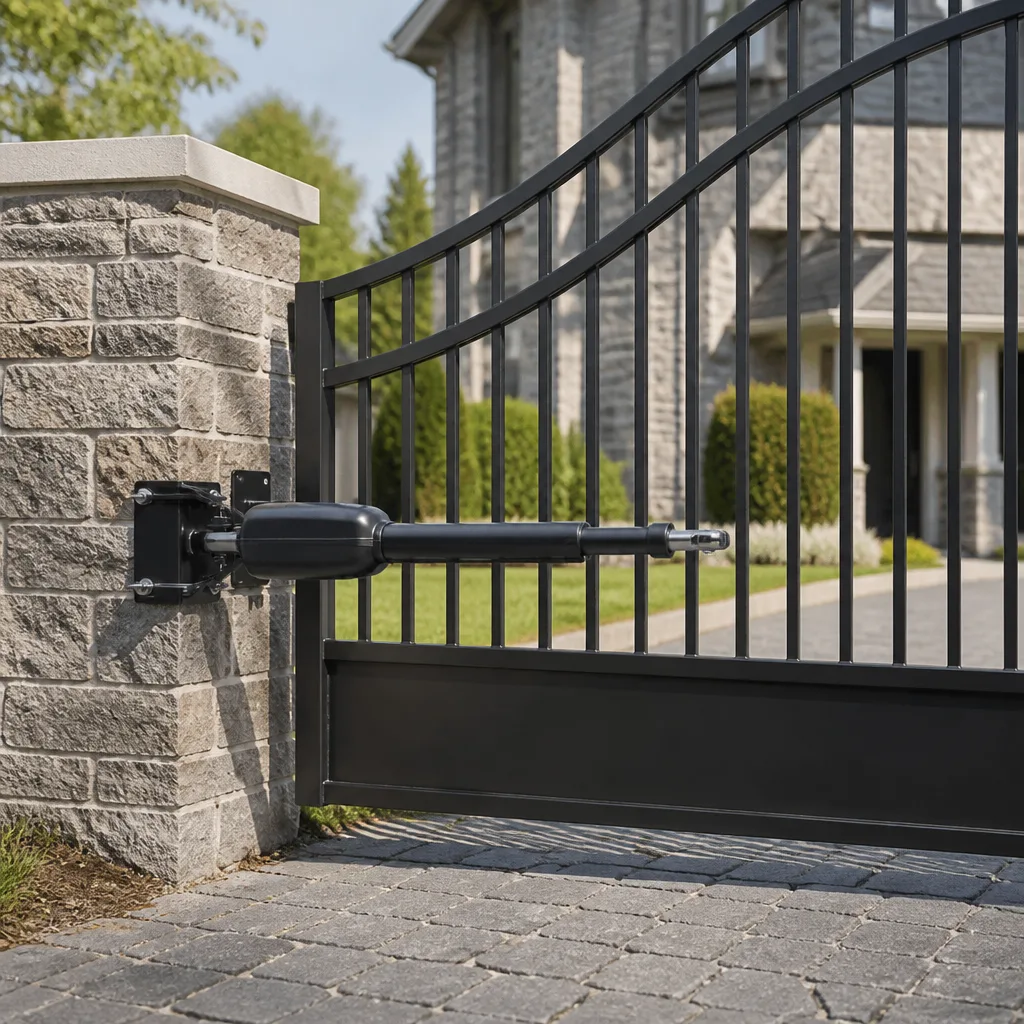
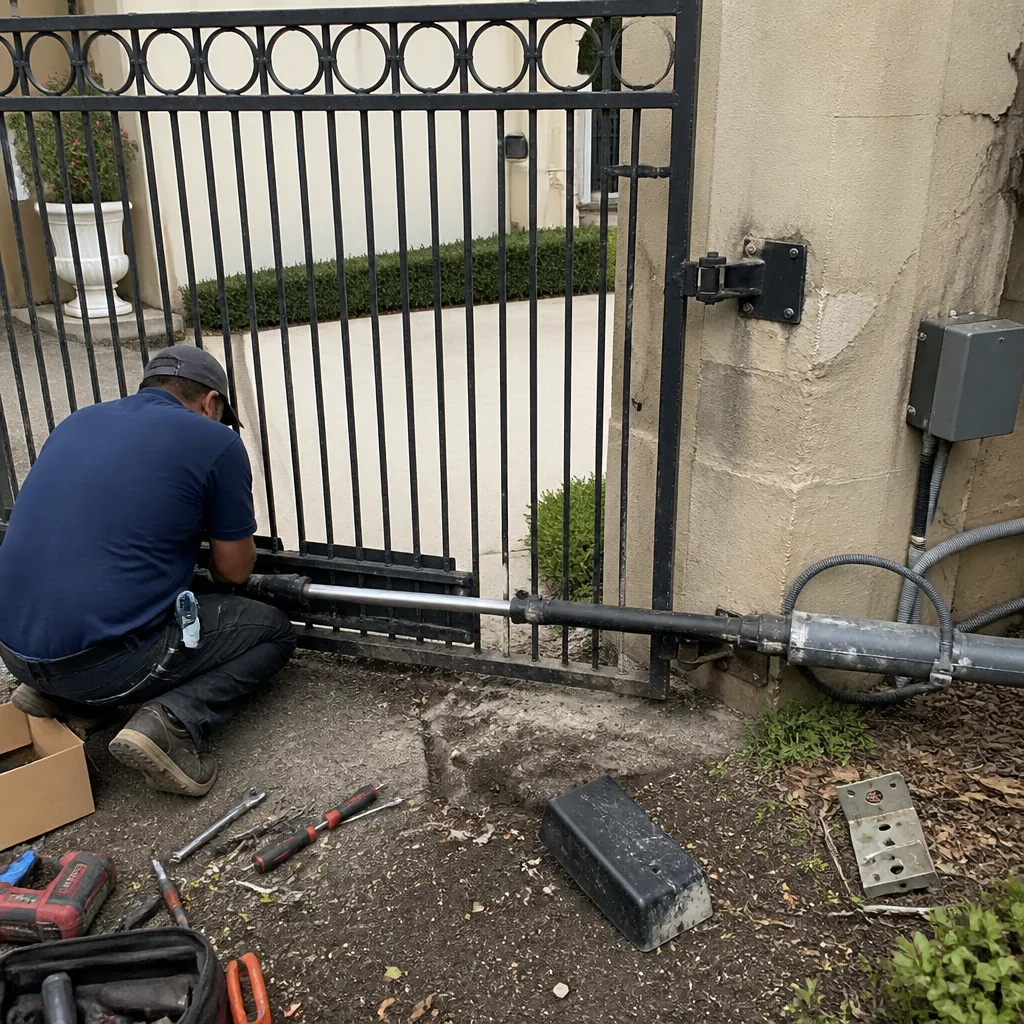 Before
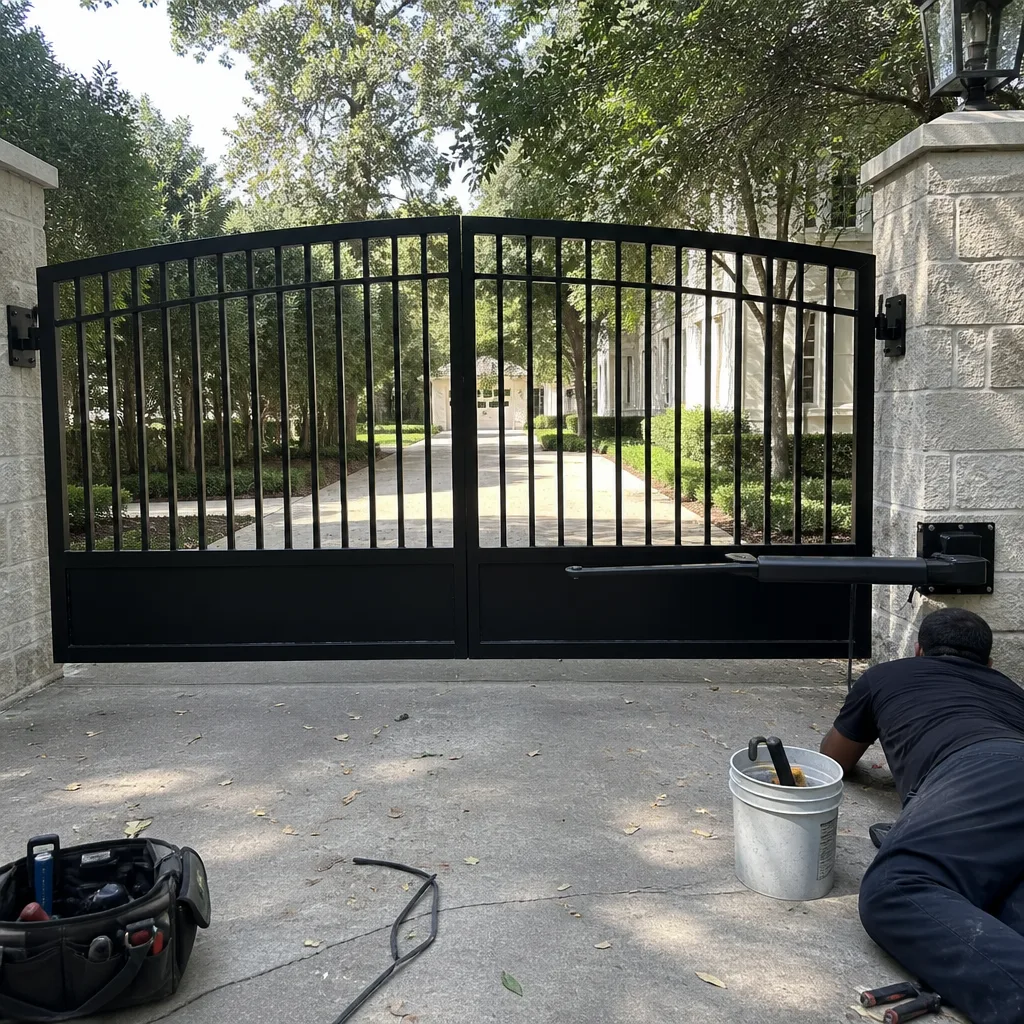 After
After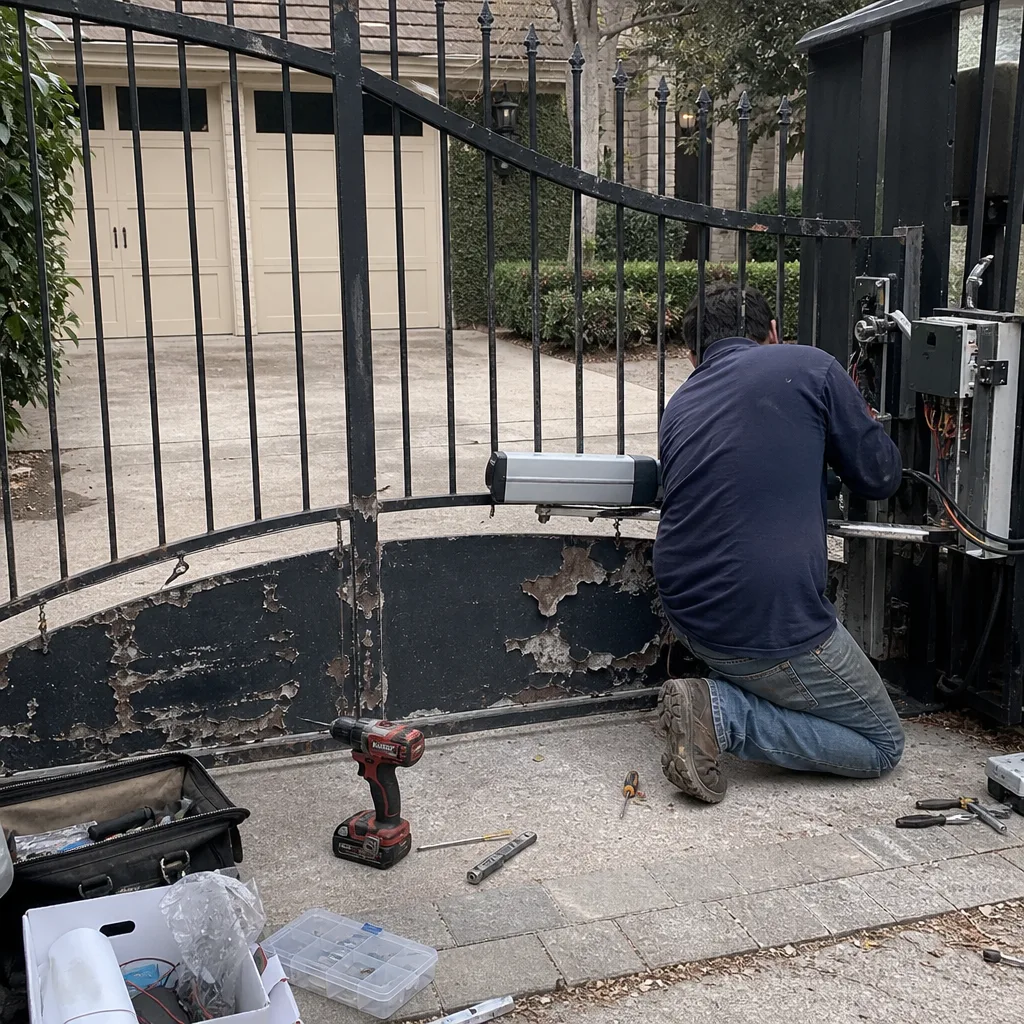 Before
 After
After Before
 After
AfterGate Repair Maintenance Checklist for University Park Homeowners
Most gate failures in University Park do not start with a broken motor. They start with something far quieter: a hinge carrying half a pound more load than it did last year, a photo-eye lens filmed with Dallas pollen, a capacitor degrading in the June heat. By the time the gate refuses to open on a Monday morning, the problem has usually been building for months. This guide lays out the maintenance checklist that prevents those Monday mornings. It is written from 42 years of gate work in North Texas, where the soil moves, the sun punishes, and a $400 casting failure usually traces back to a skipped ten-minute adjustment. If you own a home in University Park, this is the ten-minute-a-month routine that keeps your gate closing like the day it was hung.
Quick Answer
A University Park homeowner should spend ten minutes each month checking five things on an automatic gate: hinge and wheel alignment, track and chain tension, opener and limit operation, safety sensor lenses, and the condition of any wood, powder coat, or welds. Do a deeper 30-minute seasonal check four times a year, and have the opener internals and gearbox inspected once a year by a technician trained on your specific brand. Most $800-to-$2,400 emergency repairs trace back to one of those five checks going unaddressed.
Table of Contents
- The Monthly Ten-Minute Checklist
- The Seasonal 30-Minute Deep Check
- Opener and Motor Care for Nine Major Brands
- Rust, Paint, and Weld Care in the University Park Climate
- Safety Sensors, Photo Eyes, and the Reversal Test
- University Park Soil, Shifting Posts, and Gate Geometry
- Kids, Pets, and the University Park Backyard Gate
- Common Mistakes to Avoid
- When to Call a Professional
- Frequently Asked Questions
- The Bottom Line
The Monthly Ten-Minute Checklist
Set a recurring phone reminder for the first Saturday of the month. This is the single highest-value habit we teach University Park homeowners, because it catches the cheap problems before they become expensive ones. A gate is not a “set it and forget it” appliance. It is a hundred-plus pounds of steel, wood, and glass swinging on pivot points in a climate that expands and contracts metal daily. Here is the exact order we recommend, because it moves from the mechanical to the electrical and takes roughly ten minutes once you learn it.
The Five-Point Monthly Walk-Around
- Open and close the gate fully, once by hand (if master release is available) and once by motor. Listen. A gate should sound like a quiet hum and a soft close. Grinding, clicking, hesitation, or a thunk at either limit means something is wrong. If you can hear the gate struggling from inside the house, it has already been struggling for weeks.
- Check the hinges visually. Look at every hinge bolt, every weld, every mounting plate. You are looking for rust bloom, a gap that was not there before, or a bolt head that has backed out. If the gate sags more than half an inch at the latch corner when fully open, the load path has shifted.
- Clear the track and the area around the wheels. University Park yards produce oak leaves, grass clippings, and landscape gravel. Any of those can bind a wheel or wedge under a track. A small stone in a track groove adds rolling resistance that taxes the opener and shortens motor life. Clear it monthly.
- Wipe down the safety photo-eye lenses and reflector. Use a dry cloth or a slightly damp paper towel. Pollen, irrigation overspray, and lawn mower dust coat these lenses fast. A dirty eye can cause the gate to refuse to open, reverse mid-cycle, or stay open.
- Look at the chain, belt, or actuator arm. It should move without visible slack in the wrong places. For chain-drive openers, press the chain gently at the midpoint. It should give no more than half an inch. More than that and the chain needs adjustment before it skips a tooth.
If all five points pass, your gate is in the top percentile of maintained gates in University Park. If any point fails, note it. Many of these issues are a fifteen-minute fix with a wrench, provided they are caught before damage compounds.
We have a bias toward prevention because we see the other side of it. The Ironworks Gate Co. home service area includes some of the best-maintained gates in Dallas County, and even here, most of our repair calls arrive after a small five-dollar symptom has been ignored into a five-hundred-dollar failure.
The Seasonal 30-Minute Deep Check
Once a quarter, spend half an hour on a deeper inspection. In University Park, the calendar matters. Our seasons are not gentle: spring brings thunderstorms and wind, summer brings a hundred-degree slab of uninterrupted heat, fall brings leaf load, and the occasional winter ice event loads every hinge with surprising force. Each season has a signature failure mode.
Spring (March): Post-Storm Check
- Inspect for water intrusion in the operator housing. Look for condensation, water lines, or corrosion at the bottom edge of the control box.
- Check all low-voltage wiring for wind damage or exposure. North Texas thunderstorms strip wire insulation fast.
- Re-test the battery backup if your opener has one. Power outages in University Park are most common March through May. A dead backup battery is a surprise that arrives on the worst day.
- Lubricate hinge pins and wheel bearings with a dry silicone or lithium spray. Do not use WD-40 as a primary lubricant; it displaces water but offers little lasting lubrication.
Summer (June): Heat and Expansion
- Listen for motor strain. A motor that runs hotter than normal in June may have a failing start capacitor. Capacitors die in the heat. If the gate opens slower than it did in March, it is not your imagination.
- Check metal gate surfaces for fresh rust under the powder coat. The Texas summer makes metal expand. Cracks in the finish open up and let moisture in. Touch up paint chips now, before the fall humidity turns them into rust blooms.
- Check for shifting or sag. University Park clay soil shrinks in summer heat. A gate that dragged in June may swing freely once the soil dries, then bind again in fall when it rains. Track the gap at the latch.
Fall (October): Leaf and Debris Load
- Clear the track and wheel path. This is the heaviest debris season in University Park. Oak leaves wedge into wheel channels and build up against the bottom rail.
- Inspect for any wood damage on wooden gates: splitting, soft spots, signs of carpenter ants or termites at the base of the posts.
- Test the gate’s auto-close timer, if you use one. Windy fall days can trigger a safety reversal, leaving the gate open all day. Make sure the timer still closes it when it should.
Winter (December): Cold Snap and Freeze Check
- Lubricate the hinges before the first freeze. Cold metal contracts and binds; a little lubrication reduces the strain when the gate fights a 20-degree morning.
- Inspect for chain slack. Chains contract in cold weather. A correctly tensioned chain in July can be guitar-string tight in December. Check and adjust.
- Look at the gate’s ground clearance. Ice accumulation under the gate can lift or bind a wheel. If your gate has less than two inches of clearance, plan to clear ice after any freeze event.
Our Seasonal Tune-Up is built around exactly this rhythm and priced at $89. Most homeowners in University Park who book it twice a year, spring and fall, cut their repair frequency roughly in half. The offer exists because the checklist above works, but someone has to actually run it.
Opener and Motor Care for Nine Major Brands
Automatic gate openers are not interchangeable. A Linear swing-arm opener, a Viking direct-drive, and a DoorKing slide operator all have different service needs, different common failure points, and different sounds. University Park homes hold every brand in the book, which is why we keep our technicians trained and equipped on nine of the major ones: LiftMaster, FAAC, BFT, Linear, Viking, Ghost Controls, DoorKing, Elite, and Mighty Mule.
That breadth matters for a simple reason: the correct fix is brand-specific, and a generalist handyman often guesses wrong. Here is what each family of openers needs, in plain terms.
Linear and Viking: The Workhorse Slide Operators
Linear and Viking operators are common on University Park slide gates. Both are durable, but their gear cases need an annual check. Listen for a knocking sound at start-up. That is usually gear wear. Catch it early and it is a gear and pinion replacement. Ignore it and you are buying an entire operator. Check the drive chain for rust and slack monthly, and keep the gear case sealed against Dallas rain.
Ghost Controls and DoorKing: The Swing and Barrier Favorites
Ghost Controls tends to appear on lighter residential swing gates. Its biggest vulnerability is limit adjustment drift. If the gate starts slamming at the open stop or not closing all the way, the limits need re-setting, and doing that correctly requires following the exact programming sequence for your model. DoorKing operators are heavier and found on larger estates and some gated multi-home entrances. Their circuit boards are robust but sensitive to power surges. A whole-house surge protector is a good investment for any University Park home with a DoorKing.
Across all nine brands, the maintenance basics are the same: keep the operator housing dry, keep the vent screens clear of spider webs and dirt, keep the chain tension within spec, and test the manual release quarterly. That last one is important. The manual release is what lets you open the gate during a power outage. If it has never been tested, it will be seized on the day you need it.
The Five-Minute Opener Health Check
- Watch a full open-and-close cycle. The gate should start smoothly, accelerate gently, and decelerate before each stop. Jerky motion is a settings or hardware problem.
- Listen for any sound that did not exist last month. New sounds are never good. Find the source before it finds your wallet.
- Feel the motor housing after a cycle. Warm is normal. Hot to the touch is not. A hot motor is a failing capacitor, over-tensioned belt, or binding gate.
- Check the breaker and any GFCI outlet feeding the opener. Make sure the plug is seated firmly and no moisture is present in the outlet box.
- Test the manual release. Pull it, open the gate by hand a few feet, close it, and re-engage. Once a quarter is enough.
If an opener is older than twelve years and getting frequent, fixing it may be the wrong call. We have replaced openers on University Park gates where a twelve-hundred-dollar repair was poured into a motor that quit again eleven months later. A new opener can be cheaper than two repair cycles. A good technician will tell you which path makes sense.
Rust, Paint, and Weld Care in the University Park Climate
The single most damaging agent for a North Texas gate is not the summer sun. It is our specific combination of heat, humidity, and irrigation overspray. The Dallas area has a relatively humid climate for a hot-weather region, and University Park’s strict landscaping standards mean almost every gate sits within ten feet of a sprinkler head. Water hits the gate at night, the metal stays wet for hours, and the heat bakes it dry the next day. That cycle is a rust factory.
In our forty-two years of working University Park gates, we have seen more powder-coat failures on the bottom six inches of a gate than anywhere else. That bottom rail takes sprinkler spray, splash-back from driveways, and constant moisture. Once the powder coat cracks, the steel underneath is exposed. The rust starts as a brown stain, then becomes a bubbling paint line, and within two or three years, a structural problem.
Monthly Rust Walk
- Walk the full length of the gate at eye level, then crouch and inspect the bottom rail.
- Look for any brown stain running down from a weld, hinge, or bolt head.
- Check the area where horizontal and vertical bars meet. This is where water pools and where rust starts first.
- Inspect decorative scrollwork, which collects water in its curls and is often the first to rust through.
- Look at the gate posts where they enter the ground. Moisture wicks up from the soil and attacks the base of the post.
Small rust spots are fixable. Sand the spot to bright metal, treat with a rust converter, prime, and touch up with matching paint. Left alone, a quarter-sized rust spot becomes a softball-sized hole in a single University Park summer. The heat accelerates oxidation once the coating fails.
Welds deserve their own attention. A good weld is stronger than the surrounding metal, but it can still crack under decades of load cycling. Hairline cracks start at the weld toe. Look closely at every hinge-to-gate weld, every bracket, every joint. A crack that is one inch today is a gate on the ground in two years.
Safety Sensors, Photo Eyes, and the Reversal Test
Automatic gates are one of the few pieces of residential equipment that can cause serious injury or death if safety systems are ignored. Every automatic gate installed in the United States is required by UL 325 to have a secondary entrapment protection system: photo eyes, an edge sensor, or both. These systems are not optional add-ons; they are the difference between a safe gate and a court case.
Because auto gates combine enough weight to crush and enough motor force to keep pushing, we never encourage casual DIY work on a gate’s moving mechanism. The safety systems described here are designed to be checked by a homeowner. If a check fails, the fix belongs to a trained technician.
The Monthly Safety Check
- Wipe both photo-eye lenses. A smeared lens can cause the gate to refuse to close, or worse, can cause the system to misread the beam and ignore an obstruction.
- Confirm the eyes are aligned. Most photo eyes have a small indicator light that glows steady when the beam is aligned. If it flickers, the eyes need realignment.
- Test the reversal on a solid object. Place something solid, like a weighted box or a trash can, in the gate’s path. The gate should stop and reverse before causing damage to the object. Do not use a person, a child, or a pet for this test.
- Check the edge sensor if your gate has one. Run your hand along the leading edge (with the gate off) looking for cuts, splits, or swelling in the sensor strip. A damaged edge sensor may not send the stop signal when it should.
- Test the auto-close timer function. If your gate is set to auto-close, time it. It should close within the programmed interval, no longer, no shorter.
If a safety system fails a test, treat the gate as a serious hazard until a technician has corrected it. Block the gate in the open position and cut power at the breaker. Do not disable the photo eyes, do not unplug the edge sensor, do not tape over warning lights. Every University Park gate we service must leave our hands with all UL 325 safety systems functioning, no exceptions, because a gate that cannot be trusted with a child on the sidewalk is a gate that should not be running.
University Park Soil, Shifting Posts, and Gate Geometry
Blackland Prairie clay is the invisible operator behind many University Park gate problems. This soil swells dramatically when wet and shrinks when dry, creating movement that pushes against gate posts all year. A concrete footing poured at the right depth in the right diameter usually holds, but thirty-year-old posts were often set shallow or on undersized footings. Once the soil starts moving, the post goes with it.
The symptom of post shift is a gate that gradually loses its square. The latch that used to line up perfectly is now an eighth of an inch high. The gate drags at one corner. The gap between the two leaves widens at the bottom and disappears at the top. In the highlands and creek-adjacent pockets of University Park, where moisture varies most, we regularly see spring failures caused by posts that shifted over a wet winter and then locked into their new position during a dry June.
Signs of Post Movement
- The gate scrapes the ground at the outer edge but not at the hinge side.
- The latch no longer seats without lifting the gate.
- Gaps between the gate and the post widen or tighten unequally at top and bottom.
- Cracks appear in the concrete around the post base.
- The gate swings open or closed on its own when the opener is released.
Correcting post movement is not a DIY job. It involves excavating the post, resetting it in a properly sized footing, and re-hanging the gate. Often the better fix in University Park is to leave the post and add a steel brace plate or rebuild the hinge assembly. The decision depends on soil moisture history, post condition, and gate weight, which is why we quote the repair only after seeing the post. An honest assessment of a shifting post is one of the clearest places where experience pays off.
If your gate is more than twenty years old and has never had its posts checked, it is past due. Even a perfectly maintained opener cannot compensate for a gate that is no longer hanging square.
Kids, Pets, and the University Park Backyard Gate
University Park is a neighborhood of bikes on the sidewalk, dogs on leashes, and kids walking to school. The gate between the front driveway and the backyard is one of the most-used and most-overlooked pieces of hardware on the property. It opens fifty times on a Saturday. It gets slammed by a six-year-old. It gets nosed by a Labrador. It gets leaned on, hung on, and climbed on. And almost no one maintains it.
The backyard pedestrian gate is not an automatic gate in most University Park homes. It is a simple swing gate on two or three hinges with a gravity latch. But the maintenance principles are identical: check the hinges, the latch, the square, and the ground clearance. A gate that drags is putting constant strain on the hinge welds. A gate that slams closed is wearing out the latch body. A gate that does not latch reliably is a dog in the street and a child on the sidewalk.
The Backyard Gate Quarterly Check
- Lift the latch handle and open the gate fully. It should swing freely with no scraping and no binding.
- Close it and check the latch. It should seat with a solid click. No wiggling, no lifting required.
- Inspect the hinges. Rust, loose bolts, or a bent hinge pin all need attention before the gate drops.
- Check ground clearance. You want enough room for a mower and a dog toy to pass underneath, but not enough for a small dog to squeeze through. Two to three inches is the sweet spot for most University Park yards.
- Test the spring or self-closing mechanism if one is installed. It should close the gate firmly but not violently. A gate that slams shut is a finger injury waiting to happen.
Treat the backyard gate with the same respect as the driveway gate. Weight, weather, and time work on every hinge the same way. The difference is that the backyard gate protects smaller people and four-legged escape artists, which means the stakes are different but not lower.
Common Mistakes to Avoid
- Skipping the monthly visual check because “it still opens fine.” A gate can lose hinge integrity for months before it fails. By the time it stops opening, the bill is a replacement, not a repair.
- Using WD-40 on hinges and chains. WD-40 is a water displacer and light penetrant, not a lasting lubricant. It washes out in weeks. Use a dry silicone spray or lithium grease for moving metal parts.
- Pressure-washing the gate too closely or too often. Pressure washers force water into hinge pins, under the powder coat, and into the operator housing. This accelerates rust in the exact places it causes the most damage.
- Ignoring a slow-open gate. A gate that opens slower than it did six months ago is a capacitor, chain, or motor issue in its early stage. Fixing it then costs a small fraction of the eventual failure cost. University Park heat finishes off weak capacitors quickly.
- Planting climbing vines on or next to the gate posts. Beautiful, and terrible for gates. The vine holds moisture against the metal, feeds insects into the post base, and adds surprising weight. Keep growth at least two feet from the gate structure.
- Letting irrigation spray hit the gate every night. The most common self-inflicted damage we see in University Park. Sprinkler heads should be aimed so that no part of the gate gets regular water contact.
- Attempting a major gate repair without the right equipment. A gate leaf weighs hundreds of pounds. Removing it without proper support means someone gets hurt. High-tension springs, cable systems, and heavy counterweights are professional territory, not weekend projects.
When to Call a Professional
Some maintenance tasks are yours. Some belong to a trained gate technician, and knowing the line is part of responsible ownership. Call a professional if the gate shows any of these signs: visible cracks in welds or hinge brackets, a post that has moved more than a quarter inch, an opener that makes a grinding or knocking sound, a chain that keeps stretching after adjustment, an electrical symptom like a tripping breaker or dead keypad, or any UL 325 safety-system failure. If the gate or any part of it is under tension, or the work requires lifting the gate leaf off its hinges, that is not a homeowner job.
Ironworks Gate Co. offers free estimates on every repair in University Park. When you call, we will schedule a technician to look at the gate, give you a written quote, and settle the price before any work begins. We also offer a free second opinion on any written estimate from another company, which is useful when the numbers do not make sense. Call (936) 259-0479 and a live person will answer, day or night.
Frequently Asked Questions
Gate repair in University Park typically runs $180 to $340 for small fixes like limit adjustments, photo-eye realignment, and hinge lubrication. Mid-range repairs such as gear replacement, circuit board repair, or chain replacement run $400 to $900. Major repairs like post resets, opener replacement, or full gate re-hanging commonly run $1,200 to $2,800 depending on gate weight and automation type. Every quote is written and agreed before work starts, so the invoice matches the number you approved. Call (936) 259-0479 for an exact quote on your specific gate.
Run the monthly ten-minute checklist yourself, and have a professional seasonal tune-up twice a year, once in spring after storm season and once in fall before the first freeze. A gate with a lot of cycles, such as a shared driveway gate or a home with several drivers, should be professionally inspected every four months instead. The $89 Seasonal Tune-Up makes the professional side of that schedule easy to keep.
Many common repairs can be completed the same day or the next day, including hinge replacements, sensor realignment, limit adjustments, and most opener repairs on the brands we service. Since the live phone line is staffed 24 hours a day, you will know the soonest available slot before you hang up. Call (936) 259-0479 and we will give you a straight answer.
We are trained and equipped on nine major gate-automation brands: LiftMaster, FAAC, BFT, Linear, Viking, Ghost Controls, DoorKing, Elite, and Mighty Mule. Whatever is on the driveway in University Park, odds are high we have the right parts, manual, and training to service it correctly on the first visit.
Yes. We install new gates, automated systems, and full access-control packages, including the concrete work, the low-voltage wiring, and the final programming. For new installations, the process starts with a free on-site measure and a written quote. Installation work is scheduled, not same-day, because it involves ordering materials and setting form work correctly.
Yes. If a gate is stuck open, stuck closed, or has fallen off its track and created a security problem, we respond to University Park repair calls day and night. A live person answers the phone twenty-four hours a day, seven days a week, and emergency service is dispatched as quickly as a technician can reach your address. Call (936) 259-0479.
The Bottom Line
The University Park homeowner who spends ten minutes a month on their gate will almost never pay for a catastrophic gate failure. Check the hinges, the track, the lenses, the chain, and the sound. Do a deeper check every three months, and have a professional inspection twice a year. Treat rust like a slow emergency, watch for post movement in the blackland clay, and never disable a safety system. When the gate needs work, the work needs to be done right, priced before it starts, and backed in writing. That is how we have run Ironworks Gate Co. in University Park for over forty years, and it is the same standard we apply to every gate we touch. If something on your gate does not look right, call (936) 259-0479. A live person will answer, and we will be there when we say.
Written by Victor Salinas, Owner at Ironworks Gate Co., serving University Park since 2013.